
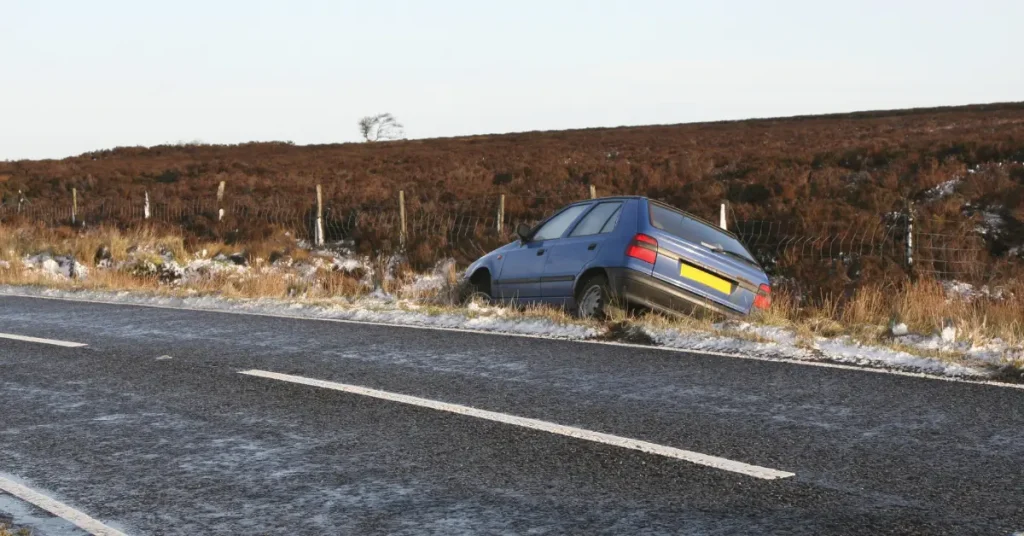
A tow truck ditch recovery in Maryland uses a winch and cable to pull a vehicle out of a ditch, embankment, or off-road position and back onto stable ground. Unlike standard towing, a recovery truck doesn’t transport your vehicle anywhere – it anchors itself, attaches to your car’s frame or designated recovery point, and slowly pulls it free. Most passenger vehicle recoveries are completed within 30 to 60 minutes of the truck’s arrival, and in many cases the driver can continue on their own once the vehicle is back on the road.
What changes the equation is how far off the road the vehicle is, what kind of terrain it’s sitting in, and what type of vehicle needs to come out. A sedan that slid two feet off the shoulder on I-270 is a standard winch-out. A pickup truck that went down an embankment on a rural Frederick County road after rain – with soft ground, a steep angle, and no clear anchor point – is a different job entirely. Most drivers don’t know those distinctions until they’re already waiting on the shoulder, and calling with the wrong description can mean the wrong truck shows up first.
If your vehicle is off the road in Maryland and won’t move, calling Geyers Towing before you do anything else gives you access to a 24/7 WRECKMASTER-certified team who can assess your situation over the phone and dispatch the right equipment on the first call. They provide Frederick County recovery dispatch and cover Montgomery County plus the greater Maryland/DC/Virginia corridor – from simple shoulder winch-outs to complex embankment recoveries using heavy-duty rotator units.
What Is a Ditch Recovery and How Is It Different from a Regular Tow?
A ditch recovery is a vehicle extraction service that uses a winch, rigging cable, and recovery straps to pull a vehicle out of a ditch, embankment, soft ground, or other off-road position – without driving the vehicle out under its own power. It is not the same as a standard tow.
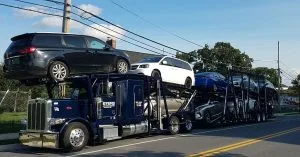
Standard towing moves a vehicle from point A to point B. The vehicle is loaded onto a flatbed or lifted by a wheel-lift and transported to a repair shop or destination. A ditch recovery doesn’t transport the vehicle at all – it repositions it back onto solid, drivable ground so the driver can either continue on their own or be towed from that point if necessary.
The main differences come down to equipment and technique:
- Standard tow: Flatbed or wheel-lift truck, vehicle loaded and transported to a destination
- Ditch recovery: Recovery truck with a winch and cable system, vehicle pulled back to stable ground only
- When both are needed: If a vehicle is recovered from a ditch but is too damaged to drive, a tow follows the recovery – often on the same service call
The recovery method used also varies based on the situation. A simple winch-out from a shallow roadside ditch uses a direct pull. A vehicle in soft mud, deep water, or on a steep grade may require a multi-point rigging setup, a snatch block to redirect the pull angle, or heavy rotator equipment for complex extractions.
If you’re not sure whether your situation calls for a ditch recovery or just roadside assistance, our guide on towing vs. roadside assistance walks through the decision clearly.
What Should You Do Immediately After Your Car Goes Into a Ditch?
The first thing to do after your car goes into a ditch is stop pressing the accelerator. Spinning the wheels in soft ground, mud, or grass buries the vehicle deeper within seconds and makes the recovery significantly harder and more expensive.
After that, follow these steps in order:
- Stop all wheel movement immediately – Put the vehicle in park and engage the parking brake. If you’re on an incline or near water, stay in the vehicle and call for help before moving.
- Turn on your hazard lights – Do this before anything else after stopping. Your hazards alert approaching traffic on Maryland roads and highways where speeds are high. Under Maryland Transportation Article § 21-405, drivers approaching a stopped vehicle displaying hazard lights are legally required to move over a lane or slow to a safe speed – your hazards trigger that protection.
- Assess whether it’s safe to exit – On I-270, I-495, Route 355, or any busy state highway, staying inside the vehicle with your seatbelt on is safer than standing near traffic. Exit only if you smell fuel, see smoke, or the vehicle is unstable.
- Do not attempt to self-recover with a rope or strap attached to another vehicle – Consumer-grade tow straps and chains can snap under load and cause serious injury. Improvised recovery attempts also frequently cause additional vehicle damage.
- Note your exact location before you call – The nearest mile marker, exit number, cross street, or landmark. On rural Frederick County roads, a county route number and a landmark are more useful than a general description.
- Call a professional recovery service – Describe the situation accurately: how far off the road the vehicle is, what it’s sitting in (ditch, mud, soft shoulder, embankment), and what type of vehicle it is.
The most common mistake drivers make is trying to rock the vehicle forward and back before calling. On pavement this sometimes works. In a Maryland roadside ditch – especially after rain when the ground is soft – it typically digs the vehicle in deeper and turns a 30-minute recovery into a 90-minute one.
If your vehicle is stuck in mud rather than a roadside ditch, the recovery approach differs. Our guide on how to get a truck or car out of mud covers the techniques and when to call for professional extraction.
What Information Do You Need to Give the Dispatcher?
When you call for a ditch recovery in Maryland, the dispatcher needs specific information to send the right truck and give you an accurate arrival time. Vague descriptions delay the response.
Have this information ready when you call:
- Your exact location – Highway name and direction of travel, nearest mile marker or exit, or cross streets on surface roads. “I-270 northbound near exit 18” is useful. “On 270 somewhere near Germantown” is not.
- Vehicle make, model, year, and drivetrain – AWD and 4WD vehicles require different recovery rigging than front-wheel-drive cars. Commercial vehicles require heavy-duty equipment entirely.
- How far off the road the vehicle is – Two feet off the shoulder is different from 20 feet down an embankment. Be as specific as possible.
- What the vehicle is sitting in – Ditch, soft grass, mud, standing water, or a steep grade all affect the recovery method and equipment needed.
- Whether the vehicle was in an accident – Collision damage changes the recovery plan. The driver needs to know before approaching.
- Whether the vehicle is running – A running vehicle with functional steering assists the recovery. A vehicle with no power requires full winch extraction.
- Your phone number and whether you’ll be at the scene – The driver will call with an ETA and may need updated location information on approach.
The more specific your description, the faster the right equipment gets dispatched. A WRECKMASTER-certified dispatcher will ask the right follow-up questions – if yours doesn’t, that’s a signal about the level of training you’re working with. Learn why WRECKMASTER certification matters when choosing a recovery provider in Maryland.
How Does the Winch Recovery Process Actually Work?
A vehicle ditch recovery using a winch follows a deliberate, step-by-step process designed to pull the vehicle free without causing additional damage. The driver assesses the scene before touching anything.
Here is what typically happens from arrival to completion:
- Scene assessment – The recovery operator walks around the vehicle, checks the terrain, identifies the best pull angle, and confirms there are no hidden hazards like standing water under the vehicle, fuel leaks, or structural damage that would change the recovery plan.
- Truck positioning – The recovery truck is positioned to create the best pull angle relative to the stuck vehicle. On a straight ditch pull, the truck parks in line with the recovery direction. For difficult angles, a snatch block is rigged to redirect the cable and multiply pulling force.
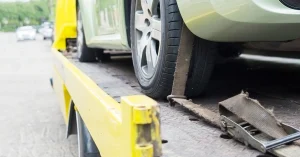
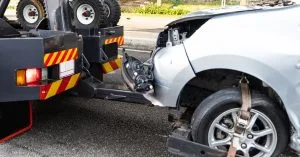
- Rigging the connection – The cable or recovery strap is attached to the vehicle’s designated tow hook or frame recovery point – not the bumper, axle, or any suspension component. Attaching to the wrong point causes damage and can fail under load.
- Controlled winch-out – The winch motor slowly reels in the cable, pulling the vehicle steadily toward solid ground. A professional operator controls the speed and watches for resistance that could indicate a buried component or unexpected terrain feature.
- Vehicle repositioning on solid ground – Once free, the vehicle is guided onto the shoulder or road surface. The operator checks for new damage, fluid leaks, and whether the vehicle is drivable before releasing the rigging.
- Damage assessment and decision – If the vehicle is drivable, the recovery is complete. If it has damage from the incident itself, a tow to a repair shop can often be arranged on the same call.
The entire process for a standard passenger vehicle in a shallow roadside ditch typically takes 20 to 45 minutes from the operator’s arrival. More complex recoveries – steep embankments, soft mud, water, or heavy vehicles – take longer and may require additional equipment or personnel.
Does Ditch Recovery Damage Your Vehicle?
A professional ditch recovery performed by a trained operator with proper equipment does not damage your vehicle. The recovery itself, when done correctly, causes no additional harm beyond any damage that occurred when the vehicle left the road.
The key factors that determine whether a recovery is damage-free are rigging technique, attachment point selection, and pull speed:
- Correct attachment points matter most – Connecting to factory tow hooks or frame recovery points distributes load correctly. Connecting to a bumper, hitch, or suspension component can cause those parts to fail under winch tension.
- No-stretch synthetic straps are safer than chains – Chains can snap under sudden load and become a projectile. Modern recovery straps are rated for controlled load and don’t store kinetic energy the same way.
- Controlled speed prevents secondary damage – A winch operated too fast can jerk the vehicle and stress the frame. Professional operators control the pull to keep tension steady throughout the extraction.
- AWD and 4WD vehicles need flatbed recovery if wheels must roll – If any part of an all-wheel or four-wheel drive vehicle’s drivetrain must turn during recovery, it needs to be on a flatbed. Improper rolling during recovery can damage the transfer case and differentials.
What can cause damage is an improper amateur recovery – a friend with a pickup truck, a consumer tow strap, and a bumper attachment. That combination frequently results in torn bumpers, bent frames, or a strap failure that sends hardware flying. If you’re in a ditch in Maryland, call a certified professional rather than waiting for roadside help from another driver.
If damage does occur during a tow or recovery, our breakdown of whether tow companies are liable for vehicle damage explains your rights and what documentation you’ll need.
Light Duty vs. Heavy Duty Ditch Recovery – Which Do You Need?
Light duty ditch recovery covers standard passenger vehicles. Heavy duty ditch recovery covers commercial trucks, tractor-trailers, buses, RVs, and construction equipment. The distinction matters because the wrong truck cannot safely complete the job – and a light-duty recovery truck attempting a heavy-duty extraction can make the situation significantly worse.
Use this as a general guide:
- Standard car, SUV, crossover, or minivan – Light duty recovery. Any properly equipped tow truck with a winch handles this.
- 3/4-ton or 1-ton pickup truck – Usually light duty, but confirm with the dispatcher based on loaded weight and drivetrain configuration.
- Box truck or cargo van under 26,000 lbs GVW – Medium duty. Not all light-duty providers have the winch capacity for these.
- Tractor-trailer, semi-truck, or 18-wheeler – Heavy duty only. Requires a wrecker with significantly higher winch rating and specialized rigging.
- RV or large motorhome – Heavy duty depending on size and weight. Confirm with the dispatcher before sending any truck.
- Construction equipment, agricultural machinery, or oversized loads – Heavy duty and potentially requires a rotator recovery unit for complex positioning.
In Maryland, commercial vehicle ditch recoveries on I-270, I-70, I-695, and Route 15 often involve cargo that complicates the job further – load shifts, hazardous material considerations, and the need to reopen lanes quickly add layers that standard recovery operations don’t face.
WRECKMASTER certification specifically covers complex recovery operations including multi-vehicle incidents, heavy rotator work, and extractions in difficult terrain. When a tractor-trailer is in a ditch on a Maryland highway at 2 a.m., certification isn’t a nice-to-have – it determines whether the operator has the training to run the job safely.
For a full breakdown of vehicle classes and which service level each requires, see our guide on heavy vs. light duty towing.
How Much Does a Ditch Recovery Cost in Maryland?
A standard light-duty ditch recovery in Maryland typically costs between $150 and $350, depending on how far off the road the vehicle is, what terrain it’s in, and what time of day it is. More complex recoveries – steep embankments, mud, water, or heavy vehicles – cost more and are priced based on the equipment and time required.
The main factors that affect the final price:
- Depth and terrain – A vehicle two feet off the shoulder costs less to recover than one 20 feet down a muddy embankment. Soft ground, standing water, and steep grades all increase the complexity and time of the operation.
- Vehicle type and weight – Light duty passenger vehicles are the baseline. Medium and heavy duty recoveries require more powerful equipment and trained operators, both of which add cost.
- Time of day – After-hours, overnight, weekend, and holiday calls carry a premium over standard daytime rates. Most Maryland ditch recoveries happen in low-light or adverse weather conditions, which increases the likelihood of an after-hours rate.
- Whether a tow follows the recovery – If the vehicle can’t be driven after extraction, a tow to a repair shop is a separate charge on top of the recovery fee. Confirm whether both services are needed when you call.
- Insurance coverage – Many auto insurance policies include roadside assistance coverage that applies to ditch recoveries. Check your policy before assuming you’re paying out of pocket. Some policies cover the full cost of a winch-out; others reimburse after the fact.
Always ask for an estimate before the truck is dispatched. A reputable Maryland recovery company will give you a price range based on your description of the situation. If a company won’t quote a range before arriving, that is worth noting before you confirm the call.
For a broader look at towing and recovery pricing in Maryland, our complete guide on how much it costs to tow a car covers hookup fees, per-mile rates, and what drives the final number up or down.
How Long Does It Take for a Recovery Truck to Arrive in Maryland?
A recovery truck in Maryland typically arrives within 30 to 60 minutes of dispatch under normal conditions. That window extends during high-traffic periods, adverse weather, and in more rural parts of the state where distances between trucks and callers are longer.
Maryland-specific factors that affect response time:
- I-270 and I-495 corridor – During peak commute hours (6-9 a.m. and 3-7 p.m.), dispatch times stretch significantly. A truck that would arrive in 25 minutes at noon may take 50 minutes during the evening rush.
- Rural Frederick County roads – Route 15, Route 340, and county roads in the western part of the county add travel time. Fewer trucks are positioned in rural areas, and terrain can slow approach speeds.
- Winter weather events – Maryland ice storms and snowfall events dramatically increase ditch recovery call volume. During a significant weather event, response times can exceed 90 minutes as crews work through a surge of simultaneous incidents.
- Proximity of the dispatch location – A company based in Germantown will reach a Montgomery County incident faster than one dispatching from Baltimore. Confirm where the company is based before assuming a quoted ETA is realistic.
- Heavy duty incidents take longer to staff – A tractor-trailer recovery on a Maryland highway may require multiple trucks and WRECKMASTER-certified operators, which adds coordination time before dispatch.
When a dispatcher gives you an ETA, ask whether it accounts for current traffic or road conditions. A company with local Maryland knowledge will give you a realistic window rather than a standard estimate that doesn’t account for the Beltway at rush hour.
Bottom Line
A tow truck ditch recovery in Maryland pulls your vehicle from a ditch, embankment, or off-road position back onto stable ground using a winch, cable, and professional rigging – it doesn’t transport the car anywhere, and when done correctly by a trained operator it causes no additional damage. Stop the wheels immediately, turn on your hazards, note your exact location, and call before attempting any self-recovery. The right information gets the right truck dispatched on the first call. If the vehicle needs to be towed after recovery, our guide on getting your car towed covers what to expect before, during, and after. For ditch recovery across Montgomery County, Frederick County, and the Maryland/DC/Virginia corridor, Geyers Towing operates 24/7 with WRECKMASTER-certified operators and a full range of light, medium, and heavy duty recovery equipment – including 75-ton rotator units for the most complex extractions.
Frequently Asked Questions
What is a ditch recovery and how is it different from a tow?
A ditch recovery is a winch-based extraction service that pulls a vehicle out of a ditch, embankment, or off-road position back onto stable ground – it does not transport the vehicle anywhere. Towing moves a vehicle from one location to another by loading it onto a flatbed or wheel-lift. If a vehicle needs to go to a repair shop after being pulled from a ditch, a tow is arranged separately, often on the same service call.
How much does a ditch recovery cost in Maryland?
Ditch recovery in Maryland typically runs between $150 and $350 for a standard passenger vehicle in a standard extraction scenario. More complex recoveries involving steep embankments, mud, standing water, or commercial vehicles cost more and are priced based on equipment and time. Always ask for an estimate before dispatch, and check whether your auto insurance covers winch-out service before paying out of pocket.
Will a ditch recovery damage my car?
A ditch recovery performed by a trained operator with proper equipment will not damage your car. The critical factors are correct attachment to designated tow hooks or frame recovery points, the use of no-stretch recovery straps rather than chains, and controlled winch speed throughout the extraction. Improper amateur recovery attempts – using a tow strap attached to a bumper or hitch – are the most common cause of recovery-related vehicle damage.
What information should I give when I call for a ditch recovery in Maryland?
When calling for a ditch recovery in Maryland, have your exact location ready – the highway name and direction, nearest mile marker or exit number, or cross streets on surface roads. Also tell the dispatcher your vehicle’s make, model, year, and drivetrain type, how far off the road the vehicle is, what it’s sitting in (ditch, mud, embankment, water), and whether it was in an accident. The more specific the description, the faster the right equipment gets dispatched.
How long does it take for a recovery truck to arrive in Maryland?
A recovery truck in Maryland typically arrives within 30 to 60 minutes of dispatch under normal conditions. That window extends during peak commute hours on I-270 and I-495, during winter weather events when call volume surges, and in rural parts of Frederick County where distances are longer. When you call, ask whether the quoted ETA accounts for current traffic and road conditions.
Do I need light duty or heavy duty ditch recovery?
Light duty ditch recovery covers standard passenger vehicles – cars, SUVs, crossovers, and light pickup trucks. Heavy duty ditch recovery covers commercial vehicles, tractor-trailers, RVs, buses, and construction equipment. When you call, tell the dispatcher your vehicle type and approximate weight. Sending the wrong truck wastes time, and a light-duty truck attempting a heavy-duty extraction can make the situation worse.
Can I try to drive out of a ditch myself before calling?
Trying to drive out of a ditch yourself is not recommended, particularly in Maryland roadside conditions where soft ground and wet terrain are common after rain. Spinning the wheels digs the vehicle deeper within seconds, and rocking forward and back frequently buries the frame or undercarriage. The best approach is to stop all wheel movement immediately, turn on your hazards, and call a professional recovery service before attempting any self-recovery.