
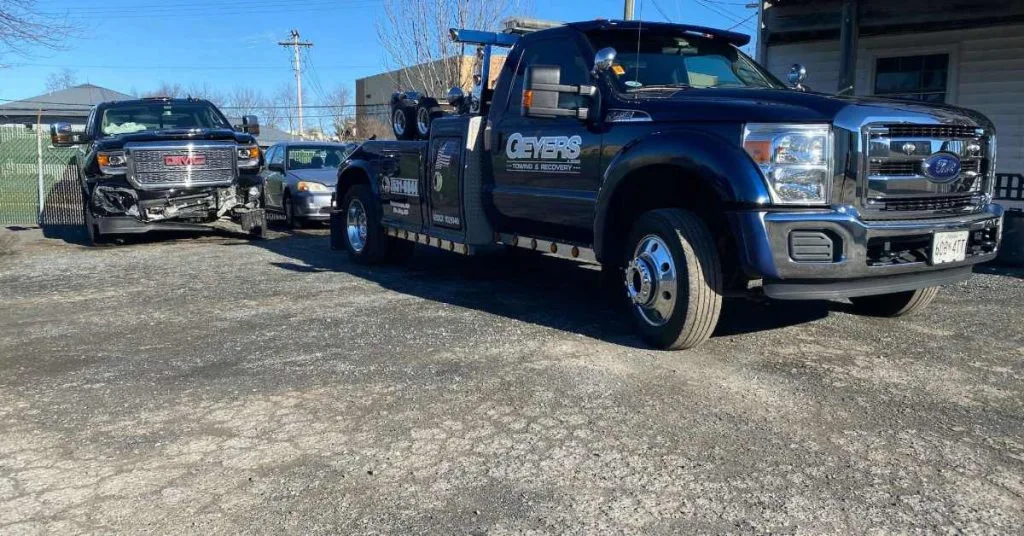
Your car stops on the shoulder of I-270. Traffic is going past at 70. The first decision is which kind of help to call: a tow truck, or a roadside technician who fixes the problem where you sit.
Roadside assistance fixes the car where it is. Towing moves it.
When to Call Roadside Assistance vs. a Tow Truck
-
You need roadside assistance
if the problem can be solved on the spot and the car will be safe to drive afterward:
- The battery is dead: the car was fine when you parked it and now it won’t turn over.
- You have a flat and a usable spare in the trunk.
- Your keys are locked inside.
- You ran out of gas.
- The car slid into mud, snow, or a shallow ditch and isn’t damaged.
-
You need a tow
if the car can’t be driven safely, or has to go somewhere to be diagnosed and repaired:
- The engine won’t start and a jump didn’t fix it.
- The transmission won’t shift or the car won’t move under its own power.
- You were in an accident and there’s body, frame, or wheel damage.
- The engine is overheating badly, or a warning light came on with smoke, steam, or a burning smell.
- You have a flat and no usable spare, or you drove on the flat before stopping.
- A police officer has told you the car has to leave the road.
- The car rolled over or went off the road and has to be recovered first.
-
Call dispatch and describe it
if you’re not sure, if the car is somewhere unsafe, or if it’s somewhere a truck can’t just back up to. Geyers dispatch answers 24 hours a day and sends both kinds of truck.
First, Get Safe
Before any call, the Maryland State Highway Administration’s advice for a breakdown:
- If the car still moves, get it as far onto the shoulder as it will go.
- Turn on the hazard lights.
- If the car is well clear of traffic lanes, the safest place to wait is usually inside it with your seatbelt on.
- In an emergency, call 911.
- On a Maryland interstate, #77 from a cell phone reaches the nearest State Police barrack.
A problem that’s fixable on the spot may still be a tow. A dead battery on a quiet street is a roadside call. The same battery in a live lane on a curve at night is a tow to somewhere safer, because nobody should stand next to that car while it gets fixed.
What Is Roadside Assistance?
Roadside assistance is for breakdowns that leave you stranded even though the car is basically fine. A technician comes to you, fixes the immediate problem, and you drive away.
Geyers’ roadside assistance covers:
- Battery jump-start
- Flat tire change, using the spare you already have
- Lockout, when the keys are inside the car
- Emergency fuel delivery
- Winch-out from mud, snow, or a shallow ditch
What Is Towing and When Do You Need a Tow Truck?
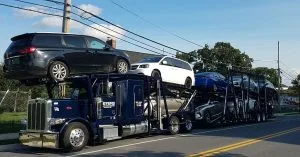
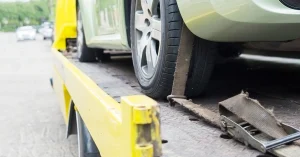
Towing is for a car that can’t be driven safely or needs a shop to find out what’s wrong. The truck loads it on a flatbed or lifts the front wheels and takes it to your mechanic, a dealership, a body shop, or your driveway. For a passenger car, pickup, or SUV, this is light duty towing.
Recovery sometimes comes before the tow. A car on its roof, down an embankment, or stuck where a simple winch won’t reach has to be recovered first, then transported. Commercial trucks, buses, and construction equipment fall under heavy duty towing, with different trucks and certified operators.
When Roadside Assistance Isn’t Enough and You Need a Tow
The jump didn’t take. If the car starts with a jump and dies again, or won’t take a jump at all, the problem is probably not just the battery. Alternator, starter, and wiring faults all look like a dead battery from the driver’s seat, and a second jump fixes none of them. The car needs a shop.
The flat has no usable spare, or you drove on it. A spare that’s flat itself, a damaged donut, or no spare at all turns a tire change into a tow. So does driving on a flat tire, even a short distance, because the wheel and sometimes the suspension can be damaged in ways you can’t see from the shoulder.
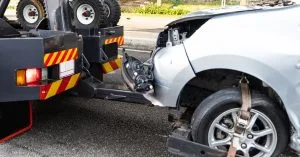
It was an accident. Even when the car starts and looks driveable, a collision can bend suspension parts or crack a radiator. Fluid on the ground, a wheel at an odd angle, or a door that won’t close means don’t drive it. That’s a tow. Our guide to towing after a car accident in Maryland covers what to do before the truck arrives.
Warning lights and overheating. A check-engine light on its own doesn’t mean a tow. A temperature gauge in the red, steam from under the hood, or an oil-pressure warning does. An engine run hot or without oil pressure can be ruined in minutes.
Does Roadside Assistance Include Towing?
Often, yes, but the details depend on which plan you have. Insurers, auto clubs, and credit cards all sell something called roadside assistance, and most include some towing. Where they differ is distance, destination, and how many calls you get. What the providers’ own pages say right now:
| Plan | Tow distance | Where the car can go |
|---|---|---|
| AAA Mid-Atlantic Classic | 5 miles per tow, four calls a year | Your choice within the 5 miles, or the nearest AAA-approved repair facility |
| AAA Mid-Atlantic Plus | 100 miles per tow, four calls a year | Your choice within the 100 miles |
| Progressive roadside assistance | 15-mile radius | Your choice within 15 miles, or the closest qualified repair shop beyond that |
| State Farm emergency road service | To the nearest repair location | Nearest repair location. Extra distance to your own mechanic is on you |
So before assuming your plan will get the car to the shop you trust, check the distance limit and the destination rules. If the plan only goes to the nearest facility and that’s not where you want the car, you can pay the extra distance yourself or call a local tow company directly. Our roadside assistance coverage guide goes deeper on what these plans do and don’t cover.
How Much Do Towing and Roadside Assistance Cost?
A roadside call is billed as the visit plus the job, whether that’s a jump, a tire swap, or a lockout. A tow is a hookup fee that covers getting the truck to you and the first few miles, then a per-mile charge after that. A flatbed costs more than a wheel-lift, and all-wheel-drive and low-clearance cars usually need the flatbed. Winching the car out of a ditch before it can be loaded adds to the bill, and so can a night, weekend, or holiday call.
If your plan covers the service, you may pay nothing at the roadside. Our guide to how much towing costs in Maryland walks through each of those charges. Dispatch quotes once they know the location, the vehicle, and the destination.
What to Have Ready When You Call
Dispatch can route the right help faster if you can tell them:
- Where you are. Road name, direction of travel, nearest exit or cross street, and which side of the road.
- What the vehicle is. Make, model, and whether it’s a car, SUV, pickup, or something larger.
- What happened. What you saw, heard, or smelled, and whether the car ran before it stopped.
- What condition it’s in. Does it start? Does it roll? Is there damage, fluid on the ground, or a tire at a bad angle?
- Where it should go, if it looks like a tow. Your mechanic, a dealership, a body shop, or home.
Frequently Asked Questions: Towing vs. Roadside Assistance
Do I have to pay for towing if I have roadside assistance?
Usually not, as long as the tow stays inside your plan’s limits. Most memberships and insurance add-ons include some towing, but they set a distance cap, a rule about where the car can go, and a number of calls per year. Outside those limits you pay the difference, or the whole tow if you call a company directly.
Is a flat tire a towing situation or a roadside situation?
Roadside, if you have a usable spare and you stopped as soon as the tire went down. A technician swaps the spare on and you drive away. It becomes a tow if there’s no spare, the spare is unusable, the wheel or rim is damaged, or you drove on the flat before pulling over.
When should I call a tow truck instead of roadside assistance?
Call for a tow when the car can’t be driven safely, when the problem needs a shop to diagnose, when there’s accident damage, or when the car is stuck badly enough to need recovery equipment. If you’re not sure, call dispatch and describe what happened. They’ll tell you which one it is.
What happens if I break down and don’t have roadside assistance coverage?
You pay for the service directly. A roadside call is the visit plus the job. A tow is a hookup fee plus mileage, with more for a flatbed, a winch-out, or an after-hours call. Calling a local company directly means you speak to the dispatcher who is sending the truck, and you choose where the car goes.
Does Geyers Towing offer roadside assistance in Montgomery County?
Yes. Geyers provides roadside assistance and towing 24 hours a day across Montgomery County, Frederick County, and the surrounding Maryland area, including Germantown. Roadside calls include battery jump-starts, tire changes, lockouts, fuel delivery, and winch-outs.
What is the difference between a tow and a recovery?
A tow moves a vehicle that is accessible and just needs transport. A recovery gets a vehicle out of a situation first: overturned, down an embankment, in water, or stuck somewhere a simple winch can’t reach. Recovery needs specialized equipment and trained operators. Geyers handles both, and dispatch will tell you which one your situation needs.
Not Sure? Call Geyers Dispatch
Not every company does both jobs. Geyers has run towing and roadside assistance since 1993, and one call reaches the dispatcher in Germantown who sends the truck that fits.
- Dispatch answers 24 hours a day, seven days a week
- Montgomery County, Frederick County, and the surrounding area
- Light-duty wreckers to rotators rated to 75 tons
- WRECKMASTER certified operators
Still comparing? See what’s included in roadside assistance service or light duty towing for cars, SUVs, and pickups.