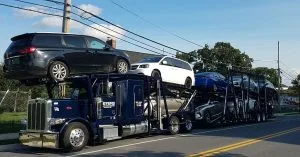

You get the call. Your car’s been towed. You drive to the lot, hand over your money, and then – right there in the parking lot – you notice a fresh scrape along the door that wasn’t there before.
Now what?
Are tow companies liable for damage? In most cases, yes – if you can show the damage happened while your vehicle was in their care and that negligence played a role. This guide breaks down exactly how liability works, what types of damage tow trucks most commonly cause, and what you should do immediately if your car comes back worse than it left.
How Tow Company Liability Actually Works
Liability in towing comes down to a legal standard called “due care.” It’s not complicated language – it just means a towing company must handle your vehicle the way any reasonable professional would. That includes properly securing the vehicle, using the right equipment for the car type, and driving in a way that doesn’t create unnecessary risk of damage.
When a tow company falls short of that standard, they can be held responsible for what results.
What Is Due Care?
In practical terms, due care means a driver should know that certain vehicles like Teslas require special towing procedures. It means chains and wheel straps should be positioned correctly before the truck moves. It means the operator should account for low-hanging branches, uneven lot surfaces, and clearance issues.
If any of those steps get skipped and your car pays the price, that’s a breach of due care – and a solid starting point for a liability claim.
Vicarious Liability of Tow Truck Drivers
Here’s something most people don’t realize: if a tow truck driver causes damage, both the driver and the company they work for can be held responsible. This is called vicarious liability.
Say the driver scrapes your Mustang while maneuvering through a tight lot. You don’t have to chase down one individual – the company employing that driver shares accountability. That matters when it comes time to negotiate or file a claim, because companies carry insurance where individual drivers may not have the same coverage.
What Types of Damage Do Tow Trucks Cause?
Towing-related damage isn’t random – it tends to cluster around the same contact points. Knowing what to look for helps you catch issues before you leave the lot.
Bumper and Body Damage
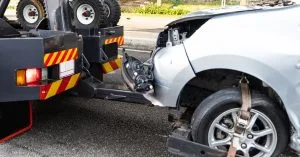
Bumpers are the most frequent casualty. When a flatbed’s wheel ramps or hook points aren’t positioned right, even a careful driver can clip the front or rear fascia. Dents from straps pulling too tight on body panels are also common, especially on lower-profile vehicles.
Tire and Wheel Damage
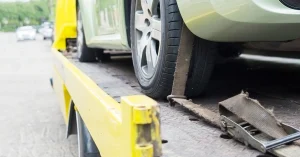
Standard wheel-lift towing grabs your car by the tires. If the grip is off – or if the vehicle gets dragged on all four wheels when it shouldn’t be – you’re looking at potential tire wear, sidewall damage, or bent rims. Some vehicles, particularly all-wheel-drive models, can suffer drivetrain damage if towed improperly.
Scratches and Paint Damage
Scratches often happen during the initial hookup, when chains or straps brush against paint. They’re easy to miss in a dimly lit lot. That’s exactly why you should inspect the vehicle in daylight before driving off – scratches that seem minor can turn into costly repairs once you get a body shop’s eyes on them.
Windshield Damage
Less obvious, but it happens. Loose gravel on tow yard surfaces gets kicked up during movement. A vehicle sitting in an uncovered lot can come back with a fresh chip or crack. If your windshield was clean when it went in, photograph it on retrieval before you move the car.
Does Towing a Car Damage It?
Done correctly by a qualified operator, towing should not damage your vehicle. The problem is “done correctly” depends heavily on the equipment used, the method chosen, and whether the driver knows your vehicle’s specific requirements.
Flatbed towing is the safest option for most cars because all four wheels leave the ground. Wheel-lift towing carries more risk, particularly for front-wheel-drive vehicles with long wheelbases, or for cars with low ground clearance. All-wheel-drive and four-wheel-drive vehicles have the strictest requirements – the wrong tow method can cause internal drivetrain damage that doesn’t show up immediately.
If you have a specialty vehicle – electric, AWD, or a low-slung sports car – it’s worth confirming in advance that the company dispatched has the right equipment and the experience to use it. A reputable company will ask about your vehicle before sending a truck. Geyers Towing’s light duty service covers these details before the truck rolls.
What to Do Immediately If a Tow Truck Damages Your Car
The steps you take in the first hour matter more than anything that comes later. Here’s what to do:
- Don’t move the vehicle yet. Document everything at the tow yard before driving away. Once you leave the lot, the company will argue the damage happened elsewhere.
- Take photos from every angle. Capture the damage close-up and also with enough background to show you’re still at the facility. Timestamp matters – most phones do this automatically.
- Tell the lot attendant on the spot. Don’t wait to call later. Note the attendant’s name and ask if there’s an incident report process. Get anything they say in writing if possible.
- Get a repair estimate quickly. A body shop can often tell whether a scrape came from a chain contact point or a strap – that kind of specific detail helps when you’re making a case.
- Contact the tow company directly. Give them a chance to respond before escalating. Keep a written record of every conversation, including who you spoke with and what they said.
- File with your insurance if negotiations stall. Your insurer can pursue the towing company on your behalf through a process called subrogation.
Proving Liability in Towing Accidents
A claim without evidence is just a story. Here’s what actually holds up:
Evidence That Works
- Photos taken before and after. The before is often harder to produce, which is why photographing your car before any tow – even a routine one – is worth building as a habit.
- Security footage. Many tow yards and impound lots have cameras. Request footage early, before it gets overwritten.
- Written repair estimates. A detailed estimate from a body shop that describes the damage specifically carries weight in any dispute.
- Witness statements. If lot attendants saw what happened, get their contact information. Third-party accounts are powerful.
- The tow receipt. This establishes when the vehicle was in their custody. Keep every document from the pickup.
The standard you need to meet is showing that the damage wasn’t present when the tow company took possession, and that their handling caused it. That’s why documentation at the scene is the most important thing you can do.
How to Seek Compensation for Towing Damage
Process of Claiming Compensation
Start with the towing company directly. Bring your photos, your repair estimate, and a clear statement of what you’re asking for. Many disputes get resolved here without escalation – companies don’t want small claims complaints or bad reviews.
If that goes nowhere, file with your insurance company. Your insurer can calculate what damages you’re owed – including the repair cost and any related expenses – and pursue the tow company’s liability coverage directly. This removes the back-and-forth from your plate.
Small claims court is available as a last resort for amounts typically under $5,000 (limits vary by state). Filing fees are low, and you don’t need a lawyer to participate. Bring every piece of documentation you have.
Do You Need a Lawyer?
For minor scratches or small dents, probably not. The claim process through your insurer or the tow company’s coverage is usually manageable on your own.
Get legal advice when the damage is significant, when there’s a dispute about fault, when the tow company refuses to engage, or when the vehicle sustained mechanical damage alongside cosmetic issues. An attorney who handles property damage claims can assess quickly whether a case is worth pursuing and what it might recover.
What About Damage Waivers?
When you authorize a tow, you may be handed a form to sign. Read it before you do.
Damage waivers attempt to limit or eliminate the company’s liability for damage that happens during the tow. But signing one doesn’t mean you have zero recourse. Courts have repeatedly found that these waivers don’t protect companies from gross negligence – meaning if the driver did something obviously careless, the waiver may not hold.
If you’re signing under distress (a breakdown situation, an accident scene), note any objections in writing if possible. Write “signed under duress” above your signature if you feel you have no choice. It won’t always help, but it creates a record.
Also worth knowing: some states have laws limiting how broadly these waivers can be written. A quick conversation with an attorney if you’ve signed one and faced damage is worth the time.
Can You Sue a Towing Company for Damaging Your Car?
Yes – and when the damage is significant enough, it’s often the right move.
The key is having evidence that supports your version of events. A lawsuit without documentation rarely succeeds, but a well-documented case – photos, repair estimates, correspondence records, witness accounts – puts you in a strong position whether you settle or go to trial.
Most claims against towing companies settle before court. The threat of litigation combined with solid evidence is often enough to produce a fair resolution. If the amount in question exceeds your state’s small claims limit, or if the company disputes fault aggressively, an attorney who works on contingency (paid from any settlement) makes the process lower-risk.
Are Tow Companies Liable for Damage? The Bottom Line
If a towing company handled your vehicle carelessly and that carelessness caused damage, they can be held responsible. The law is on your side – as long as you can show what happened and when.
The practical steps are the same whether the damage is a scratch or something more serious:
- Document everything at the lot before leaving
- Report it immediately to the company
- Get a repair estimate in writing
- Keep records of every conversation
- Escalate to your insurer or small claims court if needed
If you need a tow in Montgomery or Frederick County and want a company that treats your vehicle like it matters, Geyers Towing is available 24/7 in Germantown and across the region. We’ve handled everything from standard sedans to specialty vehicles since 1993 – and we take the due care standard seriously on every call.
Call us at (301) 540-1600 any time, day or night.
Frequently Asked Questions
Are tow companies liable for damage caused during towing?
Yes, in most cases. If a tow company fails to exercise due care – meaning they handled your vehicle negligently – they can be held liable for resulting damage. You’ll need to document the damage and show it occurred while in their custody.
What should I do immediately if a tow truck damages my car?
Don’t drive away. Photograph the damage at the lot before leaving, report it to the attendant on-site, get a written repair estimate from a body shop, and contact the tow company directly. If they don’t respond, file with your insurance company.
Can a tow truck damage your car?
Yes. Improper hookup, wrong towing method for the vehicle type, or careless handling in a lot can all cause damage – most commonly to bumpers, tires, paint, and in some cases drivetrains on all-wheel-drive vehicles.
Does towing a car damage it?
Not when done correctly. Flatbed towing is safest because all wheels stay off the ground. Problems arise when the wrong method is used – particularly wheel-lift towing on AWD vehicles – or when the operator isn’t experienced with specialty cars.
Can I sue a towing company for damaging my car?
Yes. Small claims court handles most towing damage disputes under $5,000. For larger claims or contested liability, an attorney who handles property damage cases can help you evaluate your options. Having solid documentation – photos, estimates, records – is the key factor in any successful claim.
What is a towing damage waiver and does it protect the company?
A damage waiver is a form that attempts to limit the towing company’s liability. It doesn’t offer full protection – courts typically don’t enforce waivers when gross negligence is involved. Some states also limit how broad these waivers can be. If you’ve signed one and faced damage, consult an attorney before assuming you have no recourse.
Who covers damage if a tow truck driver causes an accident?
Both the driver and the company they work for can be held responsible through vicarious liability. The company’s commercial liability insurance is typically the primary source of compensation in these situations.
What evidence do I need to prove a tow company damaged my car?
Dated photographs from before and after the tow, a written repair estimate that describes the damage specifically, any security camera footage from the lot, your tow receipt, and any witness contact information. The more you document at the scene, the stronger your position.