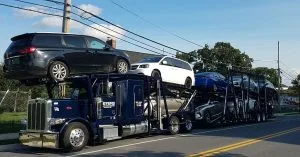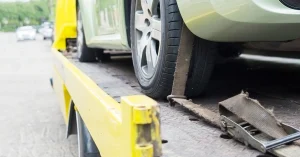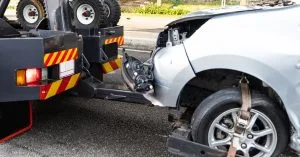

A northern Virginia towing service dispatches a licensed tow truck to your location, secures your vehicle, and transports it to a repair shop, dealership, or any address you specify. Coverage spans the full region – Arlington, Alexandria, Fairfax, Loudoun, and Prince William counties – with most providers operating 24 hours a day, seven days a week. Many companies also handle roadside calls like dead batteries, flat tires, and lockouts without needing to tow the vehicle at all.
That said, the answer changes fast depending on where exactly you’re stuck, what type of vehicle you have, and what time of day it is. Someone whose sedan broke down on I-66 near Fairfax City at 7 a.m. is dealing with a very different situation than someone whose pickup died in a Falls Church parking lot on a Sunday afternoon. Response times, heavy-duty capability, and service boundaries vary more than most people realize – and you usually don’t find that out until you’re already waiting on the side of the road.
If you’re in the greater DC corridor and your car isn’t moving, Geyers Towing dispatches 24/7 across Maryland, Washington DC, and Northern Virginia. WRECKMASTER certified and operating since 1993, they handle everything from standard lockouts to major accident recovery – including heavy-duty and commercial vehicles. Calling ahead or saving their number before an emergency makes the process a lot less stressful when it actually counts.
What Does a Northern Virginia Towing Service Actually Cover?
A towing service in Northern Virginia covers vehicle transport and roadside assistance across all major counties in the region, including light-duty passenger cars, SUVs, trucks, motorcycles, and – depending on the company – heavy-duty commercial vehicles and equipment.
The core services most providers offer include:
- Light and medium duty towing – Standard passenger vehicles, sedans, SUVs, minivans, and light trucks
- Heavy duty towing – Box trucks, tractor-trailers, RVs, construction equipment, and commercial fleets
- Accident recovery – Vehicles that have left the roadway, rolled over, or require winching from difficult positions
- Roadside assistance – Dead battery jump starts, flat tire changes, fuel delivery, and lockout service
- Long-distance towing – Transport to out-of-area destinations, repair facilities, or another state
What isn’t always covered depends on the individual company. Some providers only handle light-duty vehicles. Others don’t cross county lines. A few won’t dispatch to active accident scenes without police clearance. Knowing what you’re actually calling for – and confirming the company can handle it – saves significant time during an already stressful situation.
Geographic coverage also matters more than most people assume. Northern Virginia is a large, dense region. A company based in Woodbridge may not reach McLean quickly, and vice versa. Companies operating along the Maryland/DC corridor – like those serving Bethesda, Silver Spring, and the Beltway – often extend service into Northern Virginia as part of their standard dispatch area.
How Fast Should a Tow Truck Arrive in Northern Virginia?
Typical response times for a tow truck in Northern Virginia range from 30 to 60 minutes, though that window shifts significantly based on location, traffic, and time of day.
Northern Virginia presents specific challenges that affect dispatch timing:
- Highway corridors during rush hour – I-66, I-95, I-395, and the Dulles Toll Road can add 15 to 30 minutes to any dispatch estimate during peak commute windows
- Distance from dispatch location – Companies based closer to your area will consistently arrive faster than a provider trying to reach you from across the region
- Time of day – Late-night calls often see faster arrivals because traffic is lighter, even if fewer drivers are on staff
- Type of service needed – A simple lockout resolves faster than a winch recovery or accident scene response, which may require police clearance before the truck can access the vehicle
When a dispatcher quotes you an ETA, ask how they’re accounting for current road conditions. A company with local knowledge of Northern Virginia traffic patterns will give you a more accurate window than one reading off a standard estimate.
In the meantime, turn on your hazard lights immediately, move your vehicle as far off the active lane as possible, and stay inside if you’re on a highway. Those three steps protect you while you wait.
What Are the Most Common Reasons Drivers in Northern Virginia Call for a Tow?
The most frequent reasons drivers in Northern Virginia need a tow or roadside call fall into a predictable set of situations, most of which happen with little to no warning.
- Dead battery – Cold winters and excessive heat in the summer both accelerate battery drain. Stop-and-go commuter traffic also prevents alternators from fully recharging batteries over time
- Flat or blowout tire – Highway debris on I-66, I-95, and Route 50 makes tire damage common, particularly for drivers who commute daily on aging tires
- Engine overheating – Especially common during summer stop-and-go traffic on the Beltway or in urban corridors through Arlington and Alexandria
- Transmission or mechanical failure – Vehicles that break down mid-drive and cannot be safely operated require a tow, not a roadside patch
- Accident or collision damage – Any vehicle that isn’t drivable after an accident needs towing to a body shop or insurance-designated facility
- Lockout – Keys left inside a vehicle are one of the most common calls, and many towing companies handle this without needing to move the car
- Out of fuel – It happens, particularly to drivers running tight on time during long commutes who don’t get to a station in time
The important distinction here is whether your situation requires a tow or just a roadside call. Not everything that stops a car requires the vehicle to be moved. That distinction affects cost, wait time, and what you should tell the dispatcher when you call.
Light Duty vs. Heavy Duty Towing – Which Service Do You Need?
Light duty towing covers standard passenger vehicles – cars, SUVs, minivans, and light pickup trucks. Heavy duty towing covers everything larger: box trucks, tractor-trailers, RVs, buses, and commercial equipment. Choosing the wrong category when you call wastes time and may result in the wrong truck showing up entirely.
Here’s a practical breakdown by vehicle type:
- Standard car, SUV, or crossover – Light duty. Any standard tow truck handles this.
- 3/4-ton or 1-ton pickup truck – Usually light duty, but confirm with the dispatcher based on configuration
- Box truck or cargo van (under 26,000 lbs GVW) – Medium duty. Not all light-duty providers can handle this.
- Semi-truck, tractor-trailer, or 18-wheeler – Heavy duty only. Requires specialized equipment and a different class of operator
- RV or motorhome – Heavy duty depending on size and weight. Confirm length and weight with the dispatcher
- Construction or agricultural equipment – Heavy duty and often requires additional permitting for oversized transport
Most general towing companies in Northern Virginia handle light and medium duty. Heavy duty capability is less common and should be confirmed before any dispatcher is sent. If you manage a commercial fleet, this is worth researching before you have a truck stuck on I-95 at 2 a.m.
WRECKMASTER-certified providers specifically train for complex recovery situations – rollovers, vehicles in difficult terrain, and multi-vehicle incident management. That certification matters when a standard tow isn’t enough.
If you’re not sure which category your vehicle falls into, our guide on heavy vs. light duty towing walks through every vehicle class in detail.
What Happens After the Tow Truck Arrives?
After a tow truck arrives, the driver assesses your vehicle, confirms the destination, secures the vehicle to the truck, and transports it. The full process typically takes 15 to 30 minutes from arrival to departure, depending on the situation.
Here is what to expect step by step:
- Driver arrival and assessment – The driver checks the vehicle’s condition, confirms the safest method to load it (flatbed, wheel lift, or winch), and reviews any damage already present
- Paperwork and consent – You sign a tow authorization form. This is standard and protects both parties. Read it before signing – it should list the destination, estimated cost, and service type.
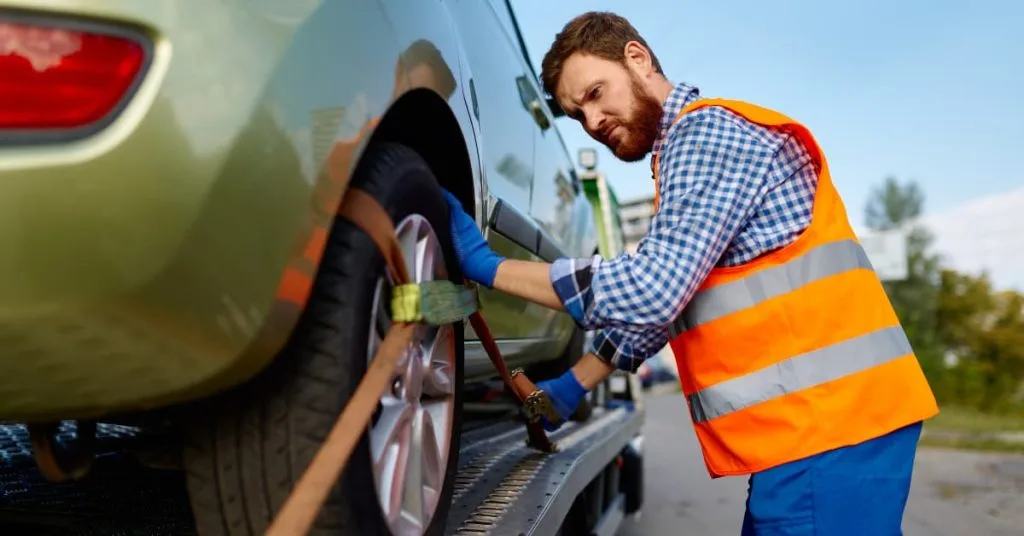
- Vehicle securing – The driver loads and straps down your vehicle. If it’s a flatbed, the car rides on a flat surface. Wheel lift towing holds the vehicle by two wheels. For AWD and 4WD vehicles, flatbed is almost always the correct method.
- Payment discussion – Most companies take payment at pickup or on delivery. Confirm the total before the truck moves. Reputable providers give you the price up front, not after delivery.
- Transport to destination – The driver takes your vehicle to the address you’ve specified. You can typically ride in the cab if you need transportation, though policies vary by company.
- Drop-off and documentation – At delivery, you or the receiving shop signs for the vehicle. Keep any paperwork in case you need it for an insurance claim.
If your vehicle is being towed after an accident, your insurance company may have a preferred shop or provider. Check before you commit to a destination – once the vehicle is dropped, moving it again means another fee.
Does Your Roadside Situation Actually Need a Tow?
Not every breakdown requires a tow. Many roadside situations are resolved on-site in 20 minutes or less, which means a roadside assistance call is faster and cheaper than a full tow. Knowing the difference saves you time and money.
Call for roadside assistance (not a tow) if:
- Your battery is dead and the car starts with a jump
- You have a flat tire and a spare is available on the vehicle
- You ran out of gas
- Your keys are locked inside the vehicle
- Your car is stuck in mud, snow, or a shallow ditch and can be freed with a winch or traction help
Call for a tow (not just roadside) if:
- The engine won’t start after a jump attempt
- There’s visible damage to the drivetrain, undercarriage, or tires that makes driving unsafe
- Your vehicle was in a collision and the wheels, frame, or suspension may be compromised
- Warning lights indicate a serious mechanical issue – transmission, oil pressure, or engine failure
- The vehicle is in a position where it cannot safely be driven out, regardless of what’s wrong with it mechanically
When you’re not sure, describe the situation clearly to the dispatcher. A good dispatcher will ask the right questions and tell you whether to send a roadside truck or a tow. If a company doesn’t ask, that’s worth noting.
For a deeper breakdown of how these two service types compare, see our guide on towing vs. roadside assistance.
How Much Does Towing Cost in Northern Virginia?
Towing in Northern Virginia typically starts around $75 to $125 for a local tow covering the first 5 to 10 miles, with per-mile charges of $3 to $7 added after that. Roadside-only calls like jump starts or lockouts usually run $50 to $100. Prices vary by company, time of day, and vehicle type.
Several factors affect what you’ll actually pay:
- Distance – Short local tows cost less than long-haul transport. Confirm the rate per mile before the truck moves.
- Vehicle weight and type – Heavy duty towing costs significantly more than light duty. Commercial vehicles and oversized loads may require additional permits, which add to the total.
- Time of day – After-hours, weekend, and holiday calls typically carry a premium. Rates after midnight may be higher than standard daytime pricing.
- Service type – A winch recovery from a ditch costs more than a standard flatbed load. Accident recovery with complex positioning costs more still.
- Insurance coverage – Many auto insurance policies and roadside assistance memberships (AAA, for example) cover some or all of a tow. Check your policy before paying out of pocket.
Ask for a firm price estimate before authorizing the tow. Reputable companies provide one. If a driver or dispatcher won’t give you a number before loading the vehicle, that’s a warning sign. Towing scams are real – they involve low hook-up quotes that balloon at delivery. You have the right to know the cost before your car is moved.
For a full breakdown of pricing factors and what to expect by service type, see our complete guide on how much it costs to tow a car.
What to Do While You Wait for a Tow Truck in Virginia Traffic
While you wait for a tow truck in Northern Virginia, your priority is staying safe and visible to other drivers. Virginia traffic – especially on major corridors – moves fast, and a stopped vehicle creates real risk if it isn’t properly positioned and marked.
- Turn on your hazard lights immediately – Do this before anything else. Hazards signal to approaching drivers that your vehicle is stopped, giving them time to change lanes. Under Virginia Code § 46.2-861.1, drivers are legally required to yield or reduce speed when approaching a stationary vehicle displaying warning lights – your hazards trigger that obligation.
- Move as far off the travel lane as possible – If you can steer the vehicle, get it to the right shoulder or an emergency pull-off. Even a few feet of clearance makes a significant difference.
- Stay inside the vehicle if you’re on a highway – On I-66, I-95, I-395, or the Dulles Toll Road, standing outside a stopped vehicle is more dangerous than staying inside. Exit only if there’s a guardrail or barrier between you and traffic.
- Set up road flares or reflective triangles if you have them – Place them 50 to 100 feet behind your vehicle to warn approaching traffic. Especially important at night or in low-visibility conditions.
- Call the towing company before calling anyone else – Get the truck dispatched first. You can make other calls while you wait.
- Communicate your exact location clearly – Note the nearest mile marker, exit number, or cross street. “On I-66 near Route 50” is less useful to a dispatcher than “I-66 eastbound, mile marker 68, just past the Fairfax Center exit.”
- Don’t accept help from strangers on the highway – Predatory towing scams sometimes involve individuals who approach stranded drivers and offer to call a “tow truck” for them. Use a company you contacted directly.
Towing scams are more common than most drivers expect. Our breakdown of how towing scams work covers the warning signs and how to protect yourself before you call.
How to Choose a Towing Company in Northern Virginia
Choosing the right towing company in Northern Virginia comes down to response time, service capability, transparent pricing, and verifiable credentials. Not every company that shows up in a search result can handle every situation or every vehicle type.
Before you call, check for:
- 24/7 availability with live dispatch – A company that goes to voicemail at 2 a.m. is not a 24/7 operation. Confirm a real person answers emergency calls.
- Service area confirmation – Ask specifically whether they dispatch to your location. County and state boundaries matter to some providers.
- Heavy duty capability – If you manage a fleet or drive a commercial vehicle, confirm before a truck is sent. Not all providers carry the equipment.
- Certification and training – WRECKMASTER certification indicates training in professional recovery, not just basic towing. It matters for accident scenes and complex extractions. Learn why WRECKMASTER certification matters when choosing a provider.
- Upfront pricing – Any company worth calling will give you an estimate before moving your vehicle. Providers who refuse to quote before hooking up should be avoided.
- Local reviews and reputation – Look for patterns in reviews: response time consistency, driver professionalism, and whether final charges matched the quote.
The best time to identify a reliable company is before you need one. Saving a number in your phone now means you’re not doing a search from the shoulder of I-95 in the dark.
Bottom Line
A northern Virginia towing service handles vehicle transport and roadside assistance across the full region – from Arlington and Alexandria to Fairfax, Loudoun, and Prince William counties – with most reputable providers available 24 hours a day. Not every breakdown needs a tow, so knowing the difference between a roadside call and a transport situation saves time and cost. Confirm service area, vehicle capability, and pricing before authorizing any move. And if you’re in the greater Maryland/DC/Virginia corridor, Geyers Towing dispatches 24/7, handles both light and heavy duty situations, and brings WRECKMASTER-certified crews to complex recoveries. For scheduled vehicle transport across the region, Geyers also offers auto transport services in Northern Virginia for moves, dealership transfers, and long-distance shipping.
Frequently Asked Questions
How fast does a northern Virginia towing service typically respond?
A northern Virginia towing service typically responds in 30 to 60 minutes, though that range shifts based on your specific location, current traffic, and the time of day. Highway corridors like I-66 and I-95 during rush hour can add significant time to any estimate. Giving your dispatcher a precise location – including the nearest mile marker or exit – helps them give you a more accurate window.
Does a towing company in northern Virginia handle heavy duty vehicles?
Some towing companies in northern Virginia handle heavy duty vehicles, but not all. Light duty providers are equipped for standard cars and SUVs. Heavy duty towing – covering tractor-trailers, box trucks, RVs, and commercial equipment – requires specialized trucks and training. Confirm your vehicle class with the dispatcher before sending any truck.
How much does a towing service in northern Virginia cost?
Towing service in northern Virginia typically starts between $75 and $125 for a local tow, with per-mile charges of $3 to $7 after the first several miles. Roadside-only calls like jump starts or lockouts usually run $50 to $100. Pricing varies by company, vehicle type, time of day, and the complexity of the situation. Always ask for a firm estimate before the vehicle is moved.
What should I do while waiting for a tow truck on a northern Virginia highway?
While waiting for a tow truck on a northern Virginia highway, turn on your hazard lights immediately, move as far off the travel lane as possible, and stay inside the vehicle if you’re on a high-speed corridor. Set out reflective triangles or flares if you have them. Call the towing company first, and give them a precise location including the nearest mile marker or exit number.
Does my insurance cover towing in northern Virginia?
Many auto insurance policies include roadside assistance or towing coverage, though the specifics vary by policy and provider. AAA memberships and some credit card benefits also cover towing up to a specified number of miles. Check your policy details before paying out of pocket – in many cases, the tow is fully or partially covered, and you can be reimbursed for the expense even if you pay at the scene.
What is the difference between roadside assistance and a towing service in northern Virginia?
Roadside assistance and a towing service in northern Virginia serve different situations. Roadside assistance covers problems that can be resolved on the spot – dead batteries, flat tires, lockouts, and fuel delivery – without moving the vehicle. Towing service transports a vehicle that cannot be safely driven to a repair facility or specified location. Many providers offer both, but they’re separate service types with different pricing and response procedures.
How do I find a reputable towing company in northern Virginia?
Finding a reputable towing company in northern Virginia means looking for live 24/7 dispatch, confirmed service area coverage, upfront pricing, and verifiable credentials like WRECKMASTER certification. Check recent reviews for patterns in response time and whether final charges matched the quoted price. The most reliable approach is identifying a company before you need one – saving the number in your contacts means you’re not searching from the side of a highway.