
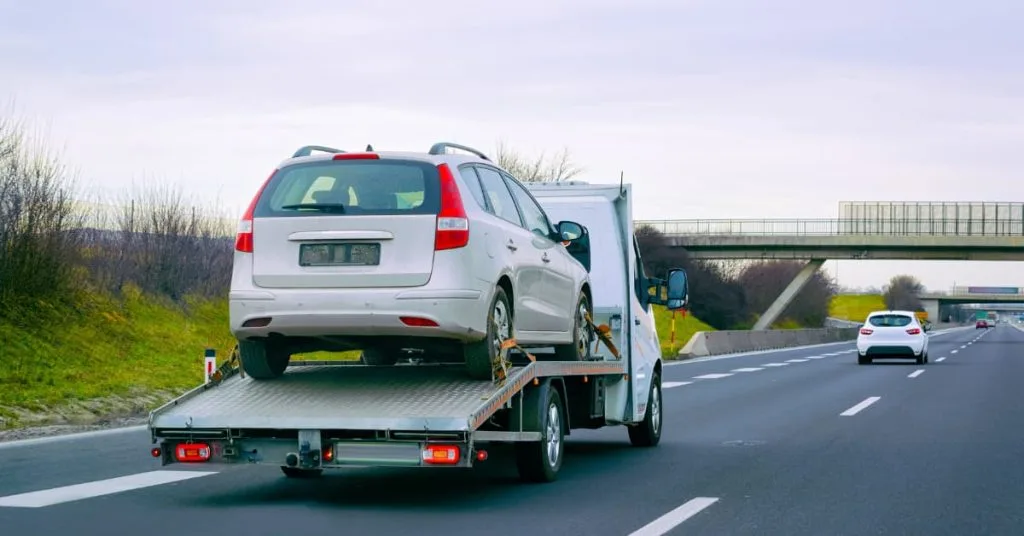
Most people do not find out what happens after your car gets towed until they are already standing on a curb, watching their vehicle disappear around a corner. The anxiety that follows is real – and it is made worse by not knowing what comes next. Where does your car go? How long do you have to get it back? What is this going to cost?
Here is the honest answer, front-loaded before anything else: after a tow, your vehicle goes to a licensed impound or storage facility, you pay a release fee plus any accrued storage charges, and you pick it up with your ID and proof of ownership. That is the core of it. What follows in this guide is every detail in between – the steps, the fees, the timing, and what to ask so nothing catches you off guard.
Geyers Towing has handled vehicle recovery across Montgomery and Frederick Counties for over 30 years. We have seen every scenario: accident tows, emergency breakdowns, police-directed impounds, and scheduled transport. The questions people ask us after a tow are almost always the same. This guide answers all of them.
What Happens to Your Car Immediately After the Tow
The moment your vehicle is loaded and the truck pulls away, a specific sequence begins. Understanding it removes most of the uncertainty.
First, the tow driver logs your vehicle into dispatch with its make, model, VIN, and condition at pickup. For accident tows or police-directed impounds, this record is transmitted to the relevant authority – either law enforcement or the requesting agency. For private or emergency tows you called in yourself, the record stays with the towing company and the designated storage facility.
Second, your vehicle is transported to a secure impound lot or storage yard. In Montgomery and Frederick Counties, licensed facilities must meet state requirements for security, lighting, and vehicle protection. Your car is not parked on a random street – it is in a controlled, monitored location.
Third – and this is the part most people miss – the storage clock starts the moment your vehicle arrives at the facility. Not when you find out about it. Not when you call. The day it arrives. That matters for how quickly you should act on retrieval.
The Three Types of Tow Situations and How Each One Works
Not all tows follow the same path. The process after your car is towed depends heavily on why it was towed in the first place.
Emergency Roadside Tow (You Called for Help)
This is the most straightforward situation. You called a towing company – or your roadside assistance provider called one – because your vehicle broke down, was in an accident, or became undriveable. The tow company takes your vehicle to a repair shop of your choosing, a designated storage facility, or your residence. You direct the destination. You already have a relationship with the company, so communication is open.
After the tow, you receive a receipt with the dropoff location and contact number. If your vehicle went to a shop, the shop handles custody from there. If it went to storage, you coordinate pickup directly with the tow company or facility.
Police-Directed Tow (Law Enforcement Ordered It)
If your car was towed after an accident, was blocking traffic, was involved in a legal situation, or was parked in violation, law enforcement may have directed the tow. This adds a layer to the release process.
In Maryland, you can find out where your vehicle was taken by contacting the law enforcement agency that directed the tow – typically the responding officers can provide the impound lot name and address. Many jurisdictions also post this information through a vehicle locator system online.
For police-directed tows, you may need a release form from the law enforcement agency before the storage facility will return your vehicle. This is standard procedure, not a complication – it just requires one extra step before you show up at the lot.
Private Property Tow (Your Car Was Removed from Private Land)
If your vehicle was parked on private property without authorization – a shopping center, apartment complex, or business lot – the property owner authorized its removal. Maryland law requires the towing company to notify local law enforcement within one hour of the tow and to post the impound facility’s contact information at the property.
Contact the local police non-emergency line for the jurisdiction where the tow occurred to get the impound location. From there, the release process follows the same path as any storage retrieval.
Step-by-Step: How to Get Your Car Back After a Tow
This is the process that applies in most situations once you know where your vehicle is.
- Locate your vehicle. If you called the tow, you already know. If law enforcement or a private property tow is involved, contact local police non-emergency dispatch with your vehicle’s make, model, and license plate. They can direct you to the impound lot.
- Call the facility before you go. Confirm hours, accepted payment methods, and what documents you need to bring. This saves a wasted trip.
- Gather your documents. Standard requirements include: government-issued photo ID, proof of vehicle ownership (title or registration), and proof of insurance. If you are picking up on someone else’s behalf, you typically need notarized written authorization from the registered owner.
- Get any required release paperwork. For police-directed tows, this means a release form from the issuing agency. For insurance-covered tows, your insurer may need to be contacted first.
- Pay the fees and retrieve your vehicle. Request an itemized receipt. Review every line item. A legitimate towing and storage operation will explain every charge without hesitation.
What the Fees Actually Cover: And What to Watch For
Hidden fees are the fear that follows every tow. It is a legitimate concern, and the best defense against it is knowing what legitimate charges look like.
A typical post-tow billing includes these components:
- Tow fee. The base charge for vehicle transport. In Maryland, rates for non-consensual tows (police-directed or private property) are regulated by the Motor Vehicle Administration. Consensual tow rates – meaning you called the company directly – are set by the towing provider and should be disclosed before the tow begins.
- Storage fee. A daily rate charged from the time your vehicle arrives at the facility. Storage rates for non-consensual tows in Maryland are also regulated. Ask any towing company upfront what their daily storage rate is before you need it.
- After-hours or gate release fee. Some facilities charge an additional fee for retrievals outside normal business hours. This is disclosed practice at reputable operations – not a surprise at the window.
- Administrative or processing fee. Some facilities charge a small fee for paperwork associated with police-directed tows. This should appear as a line item with a clear explanation.
What you should not see: vague fees with no description, charges that did not appear when you called ahead, or pressure to pay cash with no receipt. If a fee appears that was not disclosed on the phone, ask for a written explanation before paying. You have that right.
When you call Geyers Towing, ask about storage policies before the tow ever happens. We tell you exactly what you will be charged and why. That conversation takes two minutes and removes the anxiety entirely.
How Long Do You Have to Retrieve Your Vehicle?
This is where urgency matters more than most people realize.
Storage fees accumulate daily. In most cases, a vehicle that sits in a facility for five days costs noticeably more to retrieve than one picked up the same day. Beyond fees, Maryland law allows impound facilities to pursue a lien on unclaimed vehicles after a set period – meaning the facility can eventually take ownership of a vehicle that is not retrieved.
The practical guidance: act within 24 to 48 hours whenever possible. If circumstances prevent you from retrieving the vehicle quickly – you are hospitalized, out of state, or dealing with an insurance dispute – call the facility directly to explain the situation. Many will work with you on extending the timeline when communication is proactive. What they cannot do is stop the daily storage charges from accruing.
Insurance coverage sometimes applies to storage fees after certain accident tows. Check your policy or call your agent the same day as the tow. If coverage exists, your insurer will typically contact the facility directly to arrange payment or authorize release.
What to Expect from a Trustworthy Towing Company
Not every towing operation earns the trust it asks for. Here is what a reputable company does differently – and what you should expect from Geyers Towing specifically.
Before the tow, a trustworthy company tells you the total tow fee, the destination, the storage facility’s contact information, and the daily storage rate. This conversation is not optional – it is standard at operations that have nothing to hide.
During the tow, your vehicle is handled with equipment suited to its size and condition. WRECKMASTER-certified operators – the industry’s advanced certification for towing and recovery – know how to load and secure vehicles without causing secondary damage. That certification is not marketing language; it represents documented competency in vehicle handling.
After the tow, a transparent operation provides you with a receipt, answers your questions about the release process, and does not invent fees at the window. If something appears on your bill that was not discussed, you ask. A legitimate operation explains it. That is the standard.
What Comes Next: And How to Stay Ahead of It
Most of the stress that follows a tow does not come from the situation itself – it comes from not knowing what the situation is. Uncertainty about location, fees, and process is what turns an inconvenient day into a genuinely difficult one.
The drivers who move through the post-tow process fastest are the ones who make three calls immediately: to the towing company or local police to confirm the vehicle’s location, to their insurance company to check coverage, and to the storage facility to confirm hours and what documents to bring.
Those three calls take fifteen minutes. They give you a clear picture of your timeline, your costs, and your next step. From there, the process is mechanical – gather your documents, complete any required release paperwork, pay the itemized bill, and drive home.
If you are dealing with a tow in Montgomery or Frederick County right now, contact Geyers Towing directly and ask about our storage policies upfront. We will tell you exactly what the process looks like, what the fees cover, and what you need to bring. No surprises – just a clear path to getting your vehicle back.
And if you want to understand towing services before you ever need them, our guides on emergency towing and what our dispatch process looks like walk through the full picture.
Frequently Asked Questions
What happens after your car gets towed in Maryland?
Your vehicle is transported to a licensed impound or storage facility. The storage clock starts on arrival. You will need to locate the facility, gather your ID and proof of ownership, obtain any required release paperwork, and pay the tow and storage fees before retrieving your vehicle.
How do I find out where my towed car is?
If you called the tow yourself, contact the towing company directly – they will have the vehicle’s location. For police-directed or private property tows, call local law enforcement non-emergency dispatch with your plate number and vehicle description.
How much does it cost to get a towed car back in Maryland?
Costs vary by situation. Non-consensual tow rates and storage fees are regulated by the Maryland MVA. You should expect a base tow fee plus a daily storage rate. Call the facility before you go to get the current total – storage fees increase each day the vehicle sits.
What documents do I need to get my car out of impound?
In most cases: a government-issued photo ID, proof of vehicle ownership (title or registration), and current insurance documentation. For police-directed tows, you may also need a signed release form from the law enforcement agency that ordered the tow.
How long does a car stay in impound before it is sold in Maryland?
Maryland law establishes a process through which facilities can pursue a lien on unclaimed vehicles. The exact timeline varies by situation and jurisdiction. Retrieving your vehicle within 24 to 48 hours whenever possible is the safest approach to controlling both fees and ownership risk.
Does insurance cover towing and storage fees?
It depends on your policy. Many comprehensive auto insurance policies include roadside assistance or towing coverage. Some policies also cover storage fees for accident-related tows. Contact your insurer the same day as the tow to confirm what applies to your situation.
Can someone else pick up my towed car for me?
Yes, in most cases – but they will typically need written authorization from the registered owner, often notarized, along with their own photo ID. Call the facility in advance to confirm their specific requirements for third-party pickups.