

A lowered car needs a tow. That statement alone is enough to make most enthusiasts nervous – and for good reason. The wrong tow truck, the wrong technique, or an operator who doesn’t understand low-clearance vehicles can turn a manageable situation into scraped bumpers, cracked side skirts, and bent suspension components.
Towing a lowered car isn’t complicated when you know what to ask for and who to call. Here’s what you need to know before you dial.
Why Lowered Cars Are Different to Tow
Standard tow trucks are built around vehicles with standard ground clearance – typically 5 to 7 inches or more between the lowest point of the undercarriage and the road. Lowered vehicles may have 2 to 4 inches of clearance, sometimes less. Every piece of towing equipment that contacts or gets near the underside of a lowered car creates a potential damage point that doesn’t exist with stock-height vehicles.
The problems show up in three main places:
Loading onto the tow truck. Standard flatbed ramp angles can force a lowered car to scrape its front bumper, chin spoiler, or splitter against the ramp as it climbs. Even a few degrees too steep means contact with parts that are expensive to repair or replace.
Tie-down placement. Wheel lift trucks and improperly used flatbeds use straps or chains that contact the vehicle in ways that can damage body kits, side skirts, rocker panels, and custom paint. On a stock car, these points are durable. On a lowered or modified car, they may be thin fiberglass or carbon fiber.
Road clearance during transport. Even on a flatbed, an improperly loaded lowered vehicle can shift during transit in ways that cause contact with the bed edges, especially at the rear of the car near exhaust tips or diffusers.
The Only Right Equipment: A Flatbed With Extended or Drop Ramp
There is one correct equipment choice for towing a lowered car: a flatbed tow truck. Not a wheel lift. Not a hook and chain. A flatbed – and ideally one equipped with an extended ramp or a low-angle loading setup.
On a standard flatbed, the ramp angle when deployed typically runs 15 to 20 degrees. For a car with 4 inches of ground clearance, that approach angle may still cause the front lip to make contact. An extended ramp lowers that angle significantly – often to 8 to 12 degrees – which is the difference between a clean load and a scraped splitter.
Some flatbeds also have slide-out extensions that allow the ramp to start further back from the truck, giving the approach a shallower angle from the moment the car’s front tires contact the ramp. If you have a heavily modified car with very aggressive body work, ask specifically whether the company has equipment with low-angle or extended loading capability.
For more on why flatbed is the standard for specialty vehicles, see our breakdown of flatbed vs. wheel lift towing.
How to Request a Tow for a Lowered Car: What to Say
When you call a towing company about a lowered car, the information you provide upfront determines whether the right equipment and operator show up. Don’t assume the dispatcher knows what your car needs – tell them explicitly.
Here’s what to communicate:
- Ground clearance. Give them an actual number if you know it. “About 3 inches of clearance” tells a dispatcher far more than “it’s lowered.”
- Body modifications. If you have a front splitter, wide-body kit, aggressive side skirts, rear diffuser, or custom bumpers, say so. These change the loading approach and tie-down locations.
- Vehicle make and model. Some cars are known for very low clearance even stock – Miatas, Subaru BRZ/Toyota GR86, Porsche 911, and many others. An experienced operator will already know these.
- Whether it can be driven onto the flatbed. If the car is drivable, the operator can control the loading speed and angle carefully. If it needs to be winched, the approach changes significantly.
- Any previous damage or fragile areas the operator should avoid.
A good towing company will ask follow-up questions. If the person taking your call doesn’t ask anything about the vehicle after you mention it’s lowered, that’s a warning sign. Request an operator with specific experience towing modified or low-clearance vehicles.
The Loading Process: What to Watch For
If you’re present when your car is loaded – which is ideal – here’s what a proper tow of a lowered vehicle looks like:
The operator positions the flatbed on as level and flat a surface as possible. Angled or crowned pavement makes the loading angle steeper and creates problems. A professional will look for a better spot rather than loading from an awkward position.
The ramp extends to its maximum length and lowest angle. This may mean the operator deploys additional extensions or positions the truck in a specific way to reduce the approach angle.
If the car is being driven up: loading is done slowly, under the driver’s control, with the operator guiding from outside to monitor clearance. First-person perspective in the driver’s seat doesn’t give a clear view of what the front lip is doing against the ramp.
If the car is being winched up: this requires more care. The winch cable attaches to a proper tow point – not an arbitrary hook-up under the bumper that could damage the fascia. The car comes up slowly while the operator monitors clearance on both sides.
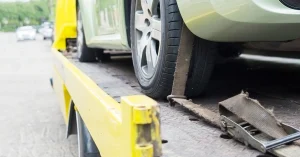
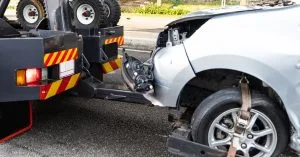
Tie-down straps go to the wheels or designated tie-down points – not wrapped around suspension components, body panels, or side skirts. Four-point tie-down is standard. The car should be secured firmly without the straps creating pressure on any visible body component.
What Can Happen If It’s Done Wrong
The damage from an improper lowered-car tow ranges from cosmetic to structural:
- Scraped or cracked front bumper/splitter – from the car contacting the ramp at too steep an angle on loading
- Damaged side skirts or rocker panels – from tie-down straps placed on body panels instead of structural points
- Bent exhaust tips or diffuser – from contact with the flatbed edge at the rear of the vehicle
- Suspension component damage – from wheel lift trucks that engage parts of the suspension not designed for that load
- Paint damage – from chain or strap contact anywhere on the body
Towing companies can be held responsible for damage that occurs during a tow if it results from operator error or improper equipment use. Our post on tow company liability for vehicle damage covers what your rights are and when you have recourse.
Specific Vehicle Considerations
Sports Cars and Exotics
Vehicles like the Porsche 911, Corvette, Ferrari, Lamborghini, and other low-slung sports cars require operators who have specifically handled them before. These vehicles often have flat undercarriage profiles with minimal clearance across a wide surface area – not just a few low points. A loading approach that works for a modified Civic won’t necessarily work for a 911 GT3. If you drive an exotic, use a company that knows exotics. Geyers has specific experience towing Corvettes and classic sports cars – see our guide on towing a Corvette for an example of what proper technique looks like on a particularly unforgiving platform.
Stance Cars and Show Vehicles
Vehicles with extreme static drops (under 2 inches of clearance), negative camber, or wide-body kits present the most complex loading challenges. In some cases, these vehicles require portable wheel ramps placed under the tow truck’s ramp to further reduce the angle – or loading on perfectly flat and level surfaces only. Be direct about the clearance and modifications. A company unwilling to problem-solve before loading is a company that will cause damage during loading.
Track Cars
Vehicles with aggressive front splitters, diffusers, canards, and wide-body aero components require extra attention to tie-down placement. Many of these components are not load-bearing and will crack or delaminate under strap pressure. Inform the operator of every fragile component before loading begins.
Electric Vehicles
Towing an EV like a Tesla isn’t just about ground clearance – the drivetrain itself is at risk if the wrong equipment or method is used. Electric vehicles cannot be flat-towed or wheel-lifted with the driven wheels on the ground, as the motors generate electricity when the wheels spin and can cause permanent damage. A flatbed is the only safe option. There are also model-specific steps like activating Transport Mode that need to happen before loading. Towing a Tesla comes with its own rulebook – and the stakes for getting it wrong are significantly higher than with a standard vehicle.
How Much Does It Cost to Tow a Lowered Car?
Towing a lowered car generally costs the same as towing any standard vehicle of the same size – the premium is in choosing the right company, not in the fee. A flatbed tow for a local distance (under 10 miles) typically runs $75 to $125. Longer distances add per-mile charges. For a detailed look at what affects towing costs in Maryland, our pricing guide breaks down the variables.
The calculus is simple: paying for a qualified tow company that handles your car correctly is always less expensive than repairing damage caused by an unqualified one.
Frequently Asked Questions: Towing Lowered Cars
Can a wheel lift truck tow a lowered car?
No – or at least, not safely. Wheel lift trucks engage the vehicle from underneath at the axle area. On a lowered car, the reduced clearance makes proper engagement difficult without the lift arm contacting other components, and the loading angle alone creates damage risk. Always request a flatbed for a lowered vehicle.
What if my lowered car can’t be driven – how does it get loaded onto the flatbed?
If the vehicle is inoperable, it gets winched onto the flatbed using a cable attached to proper tow points under the car. The operator should know these points for your specific vehicle – they’re typically reinforced locations on the subframe or frame. Never allow a winch cable to be attached to body panels, bumpers, or suspension arms.
Do I need to be present when my lowered car is towed?
It’s strongly recommended. Your presence allows you to point out fragile areas, confirm tie-down placement, and monitor loading. If you can’t be present, send detailed photos to the towing company in advance and describe every fragile or low-clearance area in writing.
My car has a carbon fiber lip kit – how do I protect it during towing?
Carbon fiber and fiberglass body components are especially vulnerable because they’re both light and brittle. Inform the operator before loading. Proper flatbed loading with a shallow ramp angle should not contact the lip – but if there’s any doubt, ask the operator to pause and assess before continuing. It’s better to delay the load than to crack the component.
What if the tow truck driver says my car is “too low” to tow safely?
Some operators will say this as a way to avoid a job they don’t have the right equipment for. A car that is drivable or accessible on flat ground can almost always be safely loaded onto the right flatbed by an operator with experience in low-clearance vehicles. If a company can’t accommodate your car, find one that can – don’t let pressure or impatience lead you to accept an unsafe tow.
Does Geyers Towing have experience with lowered and modified cars?
Yes. Geyers has been towing modified, custom, and low-clearance vehicles throughout Maryland for over 30 years. We carry flatbed equipment and our operators are experienced with the specific loading and tie-down requirements for lowered vehicles. Call (301) 540-1600 to discuss your vehicle’s specific situation before we dispatch.
The Bottom Line
Towing a lowered car the right way comes down to three things: the right equipment (flatbed with low-angle loading), an operator who understands the specific needs of modified vehicles, and clear communication about your car’s ground clearance and fragile components before the truck arrives.
If you’re in Maryland and need a tow for a lowered or modified car, call Geyers Towing at (301) 540-1600. We’ll ask the right questions, dispatch the right truck, and load your car without the kind of surprises that end up costing you in the body shop.