
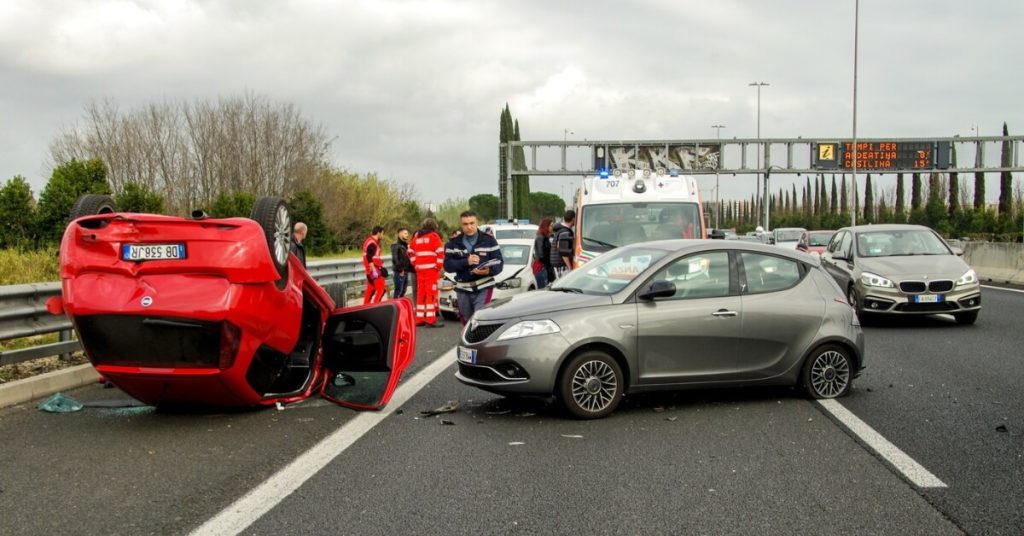
If your car flips over, the next 60 seconds matter more than most people realize. The difference between walking away and a far worse outcome often comes down to what you do – and don’t do – in those moments immediately before, during, and after the rollover.
This guide covers every step: what to do while the vehicle is still rolling, how to safely exit, and what to do once you’re clear of the car. If you’re already through the emergency and need help moving your vehicle, Geyers Towing provides 24/7 accident recovery across Montgomery and Frederick counties – call (301) 540-1600 any time.
Why Car Rollovers Are Different From Other Accidents
Most collisions are over in a fraction of a second. A rollover can last several seconds, giving you a brief but real window to influence the outcome. Vehicles with a higher center of gravity – SUVs, pickup trucks, and vans – are most prone to rolling in sharp turns or side-impact collisions. Even sedans can flip on highway medians or embankments. Knowing what to expect and what to do can make a significant difference in how you come through it.
Step 1: Brace Correctly While the Car Is Still Moving
Your instinct will be to grip the steering wheel. Don’t. When a car begins to roll, the impact force transfers from the tires to the steering wheel. Holding it puts your arms and wrists directly in the path of that force. Instead:
- Take your feet off the brake and gas immediately – ankle fractures are common when feet stay on pedals during rollovers
- Release the steering wheel
- Cross your arms across your chest
- Press your body back into the seat as firmly as possible
- Tuck your chin slightly so the roof can’t reach your head if it deforms
Your seatbelt is doing the most important work here. It keeps you in the seat rather than being thrown around the cabin, which is where most serious rollover injuries occur.
Step 2: Stay as Calm as Possible During the Roll
This is the hardest instruction on this list, but it’s one of the most important. Panic causes people to move suddenly, grab things they shouldn’t, or attempt to exit before the vehicle has stopped – all of which increase injury risk. The roll will feel disorienting. Focus on staying pressed into your seat, breathe if you can, and wait for the vehicle to stop completely before doing anything else.
Step 3: Turn Off the Engine Once the Car Stops
The moment the car comes to rest, your first action (if you’re physically able) is to switch off the ignition. This stops the fuel pump and significantly reduces fire risk from damaged fuel lines. If you smell gasoline strongly, or see smoke or flames, skip directly to exit – fire changes the priority order entirely.
Step 4: Assess Yourself and Your Passengers
Before you move, do a quick injury check:
- Run your hands along your body to feel for pain, cuts, or embedded glass
- Check your head and neck carefully
- Ask passengers to do the same
- Note whether anyone is unconscious or unable to respond
Do not move anyone who may have a neck or spine injury unless staying in the vehicle poses immediate danger (fire, rising water). Moving a person with a spinal injury incorrectly can cause paralysis. Let emergency responders handle it if at all possible.
Step 5: Call 911
Even if injuries seem minor, call 911 immediately. Rollover accidents often involve injuries that adrenaline masks – spinal issues, internal bleeding, and concussions can all feel like nothing in the immediate aftermath and become serious within hours. When you call, tell the dispatcher:
- Your location as precisely as possible (highway name, mile marker, nearby exits or landmarks)
- How many people are in the vehicle
- Whether anyone appears seriously injured
- Whether there’s fire, smoke, or a fuel smell
Stay on the line with the dispatcher until help arrives.
Step 6: Plan Your Exit – Then Execute It Carefully
How you exit depends on how the car landed.
If the car is on its roof (fully inverted):
- Brace one hand against the ceiling and both feet on the floor to stabilize yourself before releasing the seatbelt – you’ll drop when it releases
- Release the seatbelt slowly, lowering yourself to the ceiling
- Try the door first; damaged frames often prevent doors from opening
- If the door won’t open, try a window – electric windows may still work if the battery is intact
- If you need to break glass, use a headrest post or a window breaker tool aimed at a corner of the glass, not the center
- Cover your face before breaking glass and sweep remaining shards before climbing out
If the car is on its side:
- Brace against the lower door (now acting as the floor) before releasing your seatbelt
- Exit through the upper window if possible
- If you have passengers, help the least injured exit first so they can assist from outside
If the car is upright or on an embankment:
- This is the most straightforward exit scenario – check that the area outside is clear before opening doors
- Watch for traffic, unstable terrain, or nearby hazards before stepping out
Step 7: Move Away From the Vehicle and Road
Once you’re out, put distance between yourself and the car. Specifically:
- Get at least 100 feet from the vehicle in case of fire
- Move perpendicular to the road – away from traffic, not along the lane
- If on a highway, get behind a guardrail or barrier if one is nearby
- Do not return to the vehicle to retrieve belongings until emergency services have cleared the scene
Step 8: Document the Scene and Contact Your Insurance
Once you’re safely away from the vehicle and 911 has been called, begin documenting:
- Photograph the vehicle position, damage, road conditions, and any other vehicles involved
- Get contact information from witnesses before they leave
- Note the time, road conditions, and anything that may have contributed to the accident
- Do not admit fault or make detailed statements at the scene beyond what emergency responders need
Contact your insurance company as soon as practical. Most have 24-hour claims lines. Prompt reporting typically makes the claims process faster and more straightforward.
After the Scene: Get Medical Attention Even if You Feel Fine
This is non-negotiable. Go to an emergency room or urgent care even if you feel fine. Rollover accidents are among the most physically violent vehicle crashes – the forces involved are substantial even at relatively low speeds. Whiplash, concussion, soft tissue injuries, and spinal issues often don’t present symptoms immediately. Having medical documentation from the day of the accident also protects you if symptoms develop later and you need to file a personal injury claim.
What Happens to Your Vehicle After a Rollover
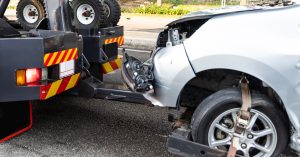
A flipped vehicle almost always needs professional recovery – not just a standard tow. Depending on how it landed, it may require:
- Rotator recovery – specialized equipment to right and recover vehicles that have rolled onto their side or roof without causing additional frame damage
- Wreck management – clearing debris, containing fluid leaks, and coordinating with law enforcement
- Flatbed transport – if the vehicle can’t be driven, it needs to be loaded and transported safely to a repair facility or impound lot
This isn’t a job for a standard tow hook. Improper recovery of a rolled vehicle can cause thousands of dollars in additional structural damage. Geyers Towing’s accident recovery team handles rollover situations regularly – our operators are WRECKMASTER certified, meaning they’re trained specifically in complex recovery scenarios including rollovers. After any accident, read our guide on what to do after a car accident for the full post-scene checklist – insurance, documentation, and next steps.
How to Prevent a Rollover in the First Place
Most rollovers are preventable. The leading causes:
- Speeding through turns: The faster you take a curve, the higher the lateral force pushing your vehicle toward a tip. Slow before turns, not during them.
- Overcorrecting: A sharp steering correction at highway speeds – particularly when a tire drops off the pavement edge – is one of the most common rollover triggers.
- Tire condition: A blowout at speed can become a tripping hazard that initiates a roll. Check tire pressure and tread regularly.
- Distracted or impaired driving: Most single-vehicle rollovers involve some form of impairment or inattention.
- Top-heavy vehicles: SUVs, vans, and pickup trucks have higher centers of gravity. Avoid loading cargo on the roof when possible, and take curves more conservatively than you would in a sedan.
Call Geyers Towing for 24/7 Rollover Recovery in Maryland
If you’ve been in a rollover accident and need professional vehicle recovery in Montgomery County, Frederick County, or the surrounding area, Geyers Towing is ready to respond. We’ve handled hundreds of accident recoveries since 1993 – from minor incidents to complex rotator recoveries on major highways. Our accident recovery service is available 24/7, 365 days a year. We work directly with all major insurance companies including GEICO, Allstate, and USAA, and our WRECKMASTER-certified operators handle every recovery with the care your vehicle deserves. Call (301) 540-1600 any time – or contact us online for non-emergency recovery scheduling.
FAQs: What to Do if Your Car Flips Over
What should I do first if my car starts to flip?
Take your feet off the pedals immediately to protect your ankles, release the steering wheel, cross your arms over your chest, and press back firmly into your seat. Your seatbelt will do the most important work. Focus on staying positioned in your seat rather than trying to grab or brace against anything.
Should I try to exit my car right after it flips?
No – wait until the vehicle has completely stopped moving. Attempting to exit during a roll significantly increases injury risk. Once stopped, assess for injuries, turn off the ignition, then plan your exit systematically.
What if I can't get my seatbelt off after a rollover?
If the belt is jammed, brace yourself against the ceiling or door before cutting it. A seatbelt cutter is one of the most valuable emergency tools you can keep in your car’s glove box. Once cut, control your drop onto the ceiling if the car is inverted.
Is it safe to stay in a flipped car?
If there’s no immediate danger (fire, rising water, unstable position), staying in the car while you assess injuries and call 911 is reasonable. If you smell strong fuel, see flames, or the car is in water, exit immediately regardless of injury status.
Will my car insurance cover a rollover accident?
Comprehensive and collision coverage typically covers rollover accidents. Contact your insurer as soon as possible after the incident. Document everything with photos before the vehicle is moved if you can safely do so.
Can a flipped car be repaired?
It depends on the damage. Many rolled vehicles sustain serious structural damage to the roof and frame that makes them total losses. Others – especially those that rolled at lower speeds or onto softer surfaces – can be repaired. Your insurance adjuster and repair shop will assess it after recovery.
Who do I call to recover a flipped car in Maryland?
Call a towing company with certified accident recovery capability. Standard tow trucks aren’t equipped to safely right and recover a flipped vehicle – improper recovery can cause additional structural damage.
Geyers Towing provides professional rollover recovery across Montgomery and Frederick counties, 24/7.