
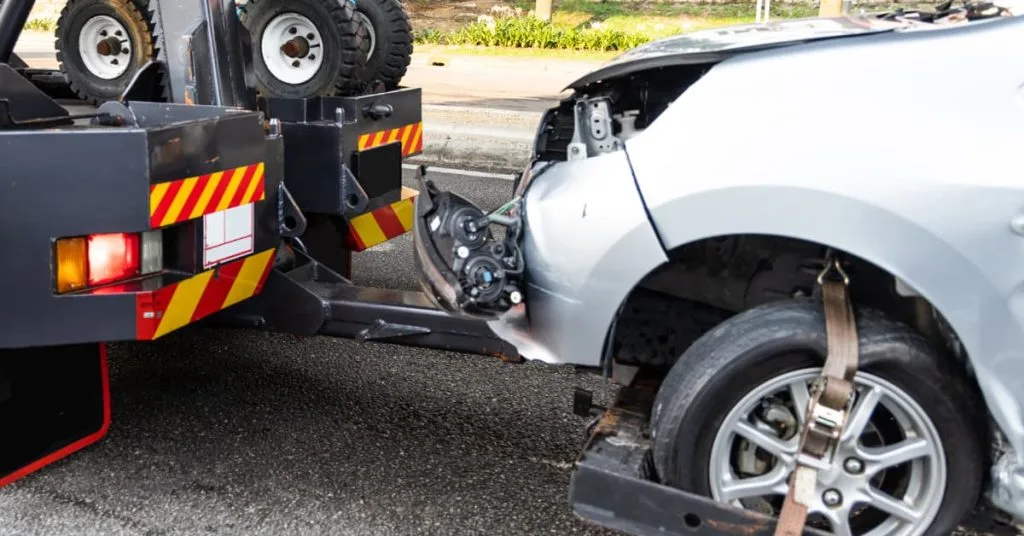
Towing after a car accident in Maryland starts with safety, then documentation, then deciding where the vehicle should go. The tow itself is only one part of the scene, but handling it correctly can prevent storage confusion and insurance delays.
If anyone may be hurt, call 911 first. If the vehicle is blocking traffic, leaking fluid, missing a wheel, or unsafe to drive, you likely need accident towing rather than standard roadside help. Do not stand near active lanes just to inspect damage.
First 10 Minutes At The Scene
Move to a safe place if you can, call 911 when needed, turn on hazards, take photos only when it is safe, and follow police direction. Maryland drivers should also respect Move Over rules and avoid standing near active lanes.
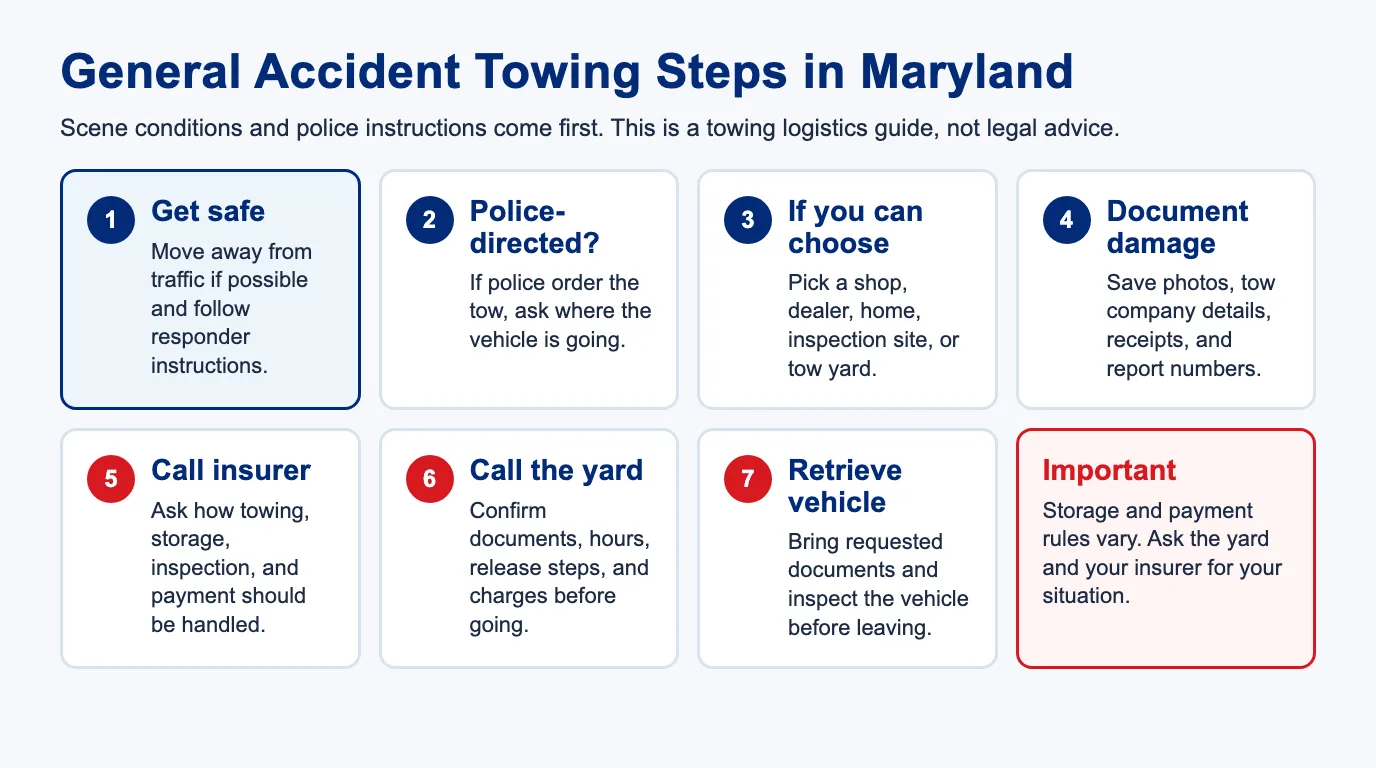
7 Safe Steps For Accident Towing In Maryland
1. Check People First
Injuries, fire, fluid leaks, and traffic danger come before the vehicle. Call emergency services when there is any doubt.
2. Document The Scene
Take photos of vehicle damage, plate numbers, the road position, nearby signs, and the other vehicle when it is safe.
3. Ask Police About Tow Rules
At some scenes, police may direct removal. Ask where the vehicle is going and how to retrieve it.
4. Call For A Tow
If you can choose the provider, give dispatch the exact location, vehicle damage, whether it rolls, and your preferred destination.
5. Choose The Destination
Your car may go to a repair shop, your home, an insurer-approved facility, or a storage yard depending on damage and coverage.
If the repair estimate comes close to what the car is worth, it may be headed for a total loss. Our guide to when a car is considered totaled explains how insurers decide.
6. Keep The Paperwork
Save the tow receipt, storage-yard details, police report number if available, and insurance claim information.
7. Follow Up Quickly
Call your insurer and the yard or shop after the tow. Daily storage fees can become expensive if the car sits.
Insurance-Approved Tow Or Your Own Company?
Some insurance companies recommend repair facilities or towing partners, but that does not always mean you must wait at the scene for a specific truck. If police have cleared you to choose a provider, ask your insurer what documentation they need and where the vehicle should be delivered.
| Tow decision | What to ask |
|---|---|
| Police-dispatched tow | Where is the vehicle being taken, what is the tow company name, and how do you retrieve property from the car? |
| Your chosen tow company | Can the tow driver take the vehicle to your repair shop, home, or insurer-approved destination? |
| Insurance coordination | Does the insurer need photos, a receipt, a claim number, or storage-yard contact details? |
What The Tow Driver Needs
The tow driver needs your location, vehicle year/make/model, visible damage, whether the car rolls or steers, and the destination. If a claim is already open, have the claim number ready. If police are on scene, follow their direction before moving the vehicle.
What Happens After It Leaves The Scene
After it leaves the accident scene, the car usually goes to the destination you approved, a police-directed storage yard, or a repair facility. Call that location the same day if possible. Confirm hours, release requirements, personal-property access, and whether storage charges apply.
If an officer selected the towing company, see how police rotation towing works before contacting the storage yard.
This follow-up step is easy to miss because the stressful part feels over once the tow truck leaves. It is not over until you know where the car is, who has the keys, what paperwork is required, and whether insurance has the tow receipt or storage-yard information.
Geyers supports Frederick accident towing through accident recovery and towing coordination. For broader post-crash guidance, read what to do after a car accident. For insurance and storage details, see the accident towing insurance guide.
How Geyers Coordinates With Insurance And Police
At an accident scene, Geyers can document the tow, follow police direction, transport the vehicle to the approved destination, and provide the receipt and location details you need for insurance follow-up. Dispatch still needs accurate scene information before the truck is sent.
If police direct the tow, ask for the towing company name and storage location before you leave if the scene allows it. If you choose the tow, confirm the destination and keep a copy of the receipt. Either way, the cleaner the documentation, the easier the insurance conversation becomes.
Before You Leave The Scene
Do not leave until you know where the vehicle is going, unless police or medical needs require otherwise. Write down the tow company name, the destination, the driver’s receipt information, and any police report number you are given. If the car is going to a storage yard, ask when you can remove personal items and what identification is required.
This is also the moment to call your insurer if you can do it safely. Tell them whether the tow was police-directed or chosen by you, where the car is going after it leaves the scene, and whether you already have photos and a receipt. Those details help the claim start cleanly instead of turning into a search for the vehicle later.
If the vehicle is being moved from a highway shoulder or police-controlled scene, confirm whether you should meet the driver at the destination or wait for a later release call. Also ask whether the vehicle can be accessed that day, because storage lots and police-directed yards may have limited release hours even after the tow is complete. If the car goes to a yard instead of a repair shop, call before sending an adjuster, rideshare, or family member to retrieve belongings, and tell your insurer or claim representative where the vehicle is stored and whether the yard requires authorization for access or release.
Frequently Asked Questions
Do I need a tow after a car accident in Maryland?
You likely need a tow if the vehicle has airbag deployment, leaking fluids, wheel or suspension damage, broken lights, steering problems, or anything that makes it unsafe to drive.
Can I choose my own towing company after an accident?
Often yes, if police and scene conditions allow it. At some scenes, police may direct the tow for safety or traffic control.
Where does my car go after accident towing?
It may go to a repair shop, insurer-approved facility, home, or storage yard. Confirm the destination, receipt, and release process as soon as possible.
Need Accident Towing In Maryland?
Call Geyers, tell dispatch what happened, and confirm the safest destination before the vehicle leaves the scene.