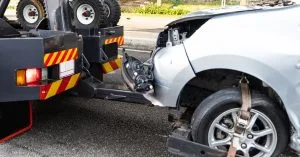

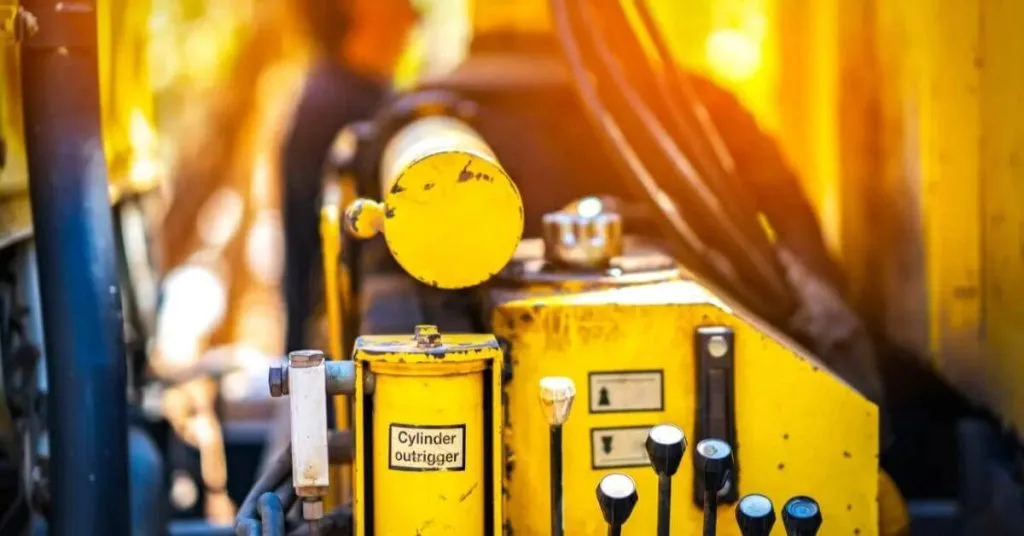
A tow truck hydraulic system converts engine power into controlled mechanical force – enough to lift, drag, and recover vehicles weighing several tons. Every lift, every winch pull, and every flatbed tilt you’ve seen a tow truck perform runs through this system. This guide breaks down how it works, what the main components do, how the systems differ by truck type, and what can go wrong when they aren’t maintained.
The Science Behind Tow Truck Hydraulics
Every tow truck hydraulic system operates on Pascal’s Law: pressure applied to a confined fluid transmits equally in all directions throughout the system. In practical terms, this means a relatively small pump can generate enormous force at the cylinder or winch end – multiplied by the surface area of the piston receiving that pressure.
The working fluid is almost always hydraulic oil, chosen for its incompressibility, lubricating properties, and thermal stability under load. Unlike air, which compresses and causes spongy, unpredictable movement, hydraulic oil transmits force nearly instantaneously – critical when a driver is lifting a 6,000-pound SUV on a highway shoulder.
How Pressure Becomes Lifting Force
The math is direct. Pressure (measured in PSI) multiplied by the area of a cylinder’s piston gives you the force output in pounds.
A cylinder with a 3-inch bore operating at 3,000 PSI produces roughly 21,000 pounds of force. Scale that up to the 5- and 6-inch cylinders found on heavy-duty recovery trucks and you’re generating forces capable of uprighting overturned semis.
This is why hydraulic systems are used instead of mechanical or electric alternatives for heavy towing. Electric actuators capable of the same force output would be prohibitively heavy. Hydraulics deliver high force from a compact, reliable package – and they’ve been doing it in tow trucks since the mid-20th century.
Core Components of a Tow Truck Hydraulic System
Every tow truck hydraulic system – regardless of the truck type or application – runs through the same four core components. Understanding what each one does explains why system failures happen and what symptoms to watch for.
1. Hydraulic Pump
The pump is the heart of the system. It draws hydraulic fluid from the reservoir and pressurizes it for delivery to the cylinders or winch motor. Most tow trucks use a gear pump or piston pump, both of which are driven by the vehicle’s engine through a Power Take-Off (PTO) unit mounted to the transmission.
Pump output is measured in gallons per minute (GPM) and PSI. A typical light-duty wheel-lift system operates at 2,000 to 2,500 PSI with 8 to 12 GPM of flow.
Heavy-duty recovery systems run 3,000 to 5,000 PSI with higher flow rates to move large cylinders quickly. Pump wear is the most common source of pressure loss – a worn pump that can’t hold rated PSI will cause slow, weak lifts.
2. Hydraulic Cylinders
Cylinders convert fluid pressure into linear mechanical motion – the actual pushing and pulling force. A tow truck uses multiple cylinders for different functions: one to tilt a flatbed deck, another to extend the wheel lift arm, others to control boom angle and extension on a wrecker.
Cylinders are either single-acting (pressure on one side, spring return) or double-acting (pressure on both sides for powered extend and retract). Double-acting cylinders are standard on modern tow trucks because they give the operator precise control in both directions – essential when loading a vehicle onto a flatbed on a slope.
3. Control Valves
Valves direct fluid to the correct cylinder at the correct time. The operator’s controls inside the cab connect to a hydraulic control valve block – moving a lever opens a specific valve circuit, routing pressurized fluid to the selected function while the others remain locked.
Relief valves are a critical safety component within the valve system. They set the maximum system pressure and automatically divert flow back to the reservoir if pressure exceeds the limit – protecting cylinders and hoses from rupture under overload. A misadjusted or failed relief valve is a serious safety hazard.
4. Reservoir and Fluid
The reservoir stores hydraulic fluid and serves as a heat exchanger, allowing fluid to cool between cycles. Most tow truck reservoirs hold 5 to 20 gallons depending on system size. The fluid itself must be changed on a regular maintenance schedule – typically every 1,000 to 2,000 hours of operation – because it degrades from heat, water contamination, and metal particles shed by worn components.
Running degraded fluid accelerates pump and cylinder wear dramatically. Low fluid level is the most common cause of erratic system behavior – air entering the system through a low reservoir causes jerky, inconsistent movement and foaming in the fluid.
Core Hydraulic System Components at a Glance
| Component | Function | Failure Sign |
|---|---|---|
| Pump | Pressurizes fluid from reservoir | Slow lifts, low pressure |
| Cylinders | Convert pressure to linear force | Drift, fluid leaks at seals |
| Control Valves | Direct fluid to correct function | Functions won’t activate or cross-activate |
| Reservoir | Stores and cools fluid | Foaming, air in lines, overheating |
Hydraulic Systems by Tow Truck Type
The tow truck hydraulic system is configured differently depending on what the truck is designed to do. A wheel-lift truck has different cylinder requirements than a flatbed, and neither resembles the complex multi-circuit systems on a heavy-duty rotator. Understanding these differences matters when specifying replacement parts or diagnosing a problem.
Wheel Lift Hydraulic Systems
Wheel lift trucks are the most common in light-duty local towing. The hydraulic system powers two primary functions: extending and retracting the L-arm that cradles the vehicle’s wheels, and raising and lowering the entire assembly. Most wheel lift systems use a single double-acting cylinder for the lift function and a separate circuit for the arm extension.
The PTO-driven pump engages when the driver activates the system from the cab. Operating pressure on wheel lift systems typically runs 2,000 to 2,500 PSI – sufficient to handle most passenger vehicles and light trucks.
For a detailed look at how wheel lift compares to other methods from a practical towing standpoint, see our breakdown of flatbed towing vs. wheel lift.
Flatbed Hydraulic Systems
Flatbed (rollback) trucks use hydraulics to tilt the entire deck rearward for loading and return it to the horizontal position for transport. This requires a powerful cylinder arrangement – typically a pair of large-bore cylinders mounted under the deck frame – capable of controlling a loaded deck that may weigh 10,000 pounds or more.
The system must also control descent speed when lowering a loaded deck. Uncontrolled descent under gravity would be dangerous; flow control valves restrict the rate at which fluid can leave the tilt cylinders, ensuring a controlled, predictable lowering rate regardless of the load weight. Many flatbed systems also include a hydraulic winch at the front of the deck for pulling non-running vehicles onto the platform.
Wrecker and Recovery Hydraulic Systems
Medium and heavy-duty wreckers carry the most complex hydraulic systems on any tow truck. A standard integrated wrecker boom uses hydraulics for at least four independent functions: boom elevation, boom extension, underlift raise/lower, and winch operation. Each function has its own cylinder circuit and control, and on larger trucks, dual winch systems operate independently.
Heavy recovery trucks – including rotator wreckers – add a rotation circuit that can swing the boom through 360 degrees while under load. These systems operate at 3,000 to 5,000 PSI and require significantly larger pumps, larger-diameter hoses rated for high working pressure, and more sophisticated control valve blocks. The **heavy-duty towing** required for semi recovery and overturned vehicle work depends entirely on this hydraulic infrastructure performing at rated capacity.
The Power Take-Off: Connecting Engine to Hydraulics
The Power Take-Off (PTO) is what bridges the truck’s engine and the hydraulic pump. It’s a mechanical gearbox that mounts to the transmission’s auxiliary port and transfers rotational power to the hydraulic pump shaft. When the driver engages the PTO – usually via a dash-mounted air switch or electric switch – the pump begins turning and hydraulic pressure builds.
PTO selection matters. A pump that flows 8 GPM at 2,500 PSI requires a certain torque input at a specific RPM range.
Mismatched PTOs either overspeed the pump (causing premature wear) or don’t turn it fast enough to generate rated pressure. Most tow truck manufacturers specify PTO and pump combinations as a matched set for this reason.
PTO engagement under load – engaging the PTO while hydraulic functions are already being demanded – can cause transmission stress and should be avoided. Standard procedure is to engage PTO at idle before activating any hydraulic functions.
Hydraulic Winches: How They Work and When They’re Used
A hydraulic winch replaces the electric motor of a standard winch with a hydraulic motor fed by the truck’s main hydraulic circuit. The motor converts fluid flow into rotational force on the winch drum, which pulls the cable. Hydraulic winches used in heavy-duty towing and recovery are preferred over electric models for sustained heavy work for two reasons: they don’t overheat under continuous load, and their pulling force is governed by system pressure rather than battery capacity.
A typical heavy wrecker hydraulic winch rated at 25,000 pounds line pull operates at full capacity continuously as long as the engine is running and system pressure is maintained. Electric winches of equivalent rating generate significant heat during extended pulls and risk motor burnout. For ditch recoveries, vehicle extractions from mud, and uprighting rollovers – the kind of work described in our tow truck ditch recovery guide – hydraulic winches are the standard.
Line Speed vs. Pulling Force
Hydraulic winch performance involves a trade-off between line speed and pulling force. At full load, line speed drops as the pump works to maintain pressure against resistance.
As load decreases, speed increases. Operators working complex recoveries learn to work with this characteristic – using the slowest speed for initial movement and allowing line speed to increase as the vehicle breaks free.
Flow control valves on winch circuits allow operators to set maximum line speed independently of the load, which matters when controlled, slow movement is needed – such as lowering a vehicle on a steep grade.
Common Hydraulic System Problems and What Causes Them
Most tow truck hydraulic problems trace back to one of four causes: fluid contamination, fluid loss, seal failure, or pump wear. Recognizing the symptom helps identify the source quickly.
Slow or Weak Operation
Slow lifts or winch pulls that used to be faster point to either low system pressure or reduced pump flow. Check fluid level first – a low reservoir introduces air into the system.
If fluid level is correct, the pump may be worn and no longer producing rated pressure. A pressure gauge on the system test port confirms whether the pump is at fault.
Cylinder Drift
A loaded cylinder that slowly retracts on its own – lowering a raised vehicle without input from the operator – indicates internal seal leakage within the cylinder or a leaking control valve that allows fluid to bleed past when it should hold position. Both require immediate attention. A cylinder that drifts under a suspended load is a safety hazard.
Fluid Leaks
External leaks – oil appearing on hoses, fittings, cylinder shafts, or the pump housing – are usually seal and fitting failures. High-pressure hydraulic leaks are not just a maintenance issue; a pinhole leak in a high-pressure line can inject fluid into skin at pressures sufficient to cause serious injury, a condition known as hydraulic injection – classified as a medical emergency by the National Safety Council. Any suspected high-pressure leak should be diagnosed with proper equipment, not by running a hand along the line.
Overheating
Hydraulic fluid that runs too hot breaks down faster, reduces lubrication, and causes seal deterioration. Common causes include continuous operation without rest cycles, a clogged reservoir breather, low fluid level, or a relief valve set too high that causes the pump to work against pressure constantly. Most systems have a temperature gauge or warning – overheating warnings should not be ignored.
Hydraulic System Maintenance Checklist
Key service intervals for tow truck hydraulic systems:
- Check fluid level daily before first use
- Inspect hoses and fittings for leaks or abrasion weekly
- Change hydraulic fluid every 1,000 to 2,000 operating hours
- Replace hydraulic filter at every fluid change or annually
- Test system pressure at pump test port annually or after pump service
- Inspect cylinder seals for weeping or drift quarterly
- Verify relief valve setting annually – do not adjust without a pressure gauge
When to Call a Professional vs. DIY Hydraulic Repairs
Minor hydraulic maintenance – fluid changes, filter replacements, and tightening loose fittings – is within reach of anyone with basic mechanical ability and the right fluid specifications. Anything involving system pressure adjustment, cylinder seal replacement, or pump diagnosis should be handled by a qualified hydraulic technician.
Incorrectly set relief valves can cause catastrophic cylinder or hose failure under load. Cylinder seal replacement done without proper cleaning of the bore and correct seal sizing leads to immediate re-failure. The hydraulic system on a tow truck operates under serious working pressure – repairs that go wrong don’t just inconvenience the operator, they create dangerous conditions for drivers and the vehicles being towed.
If you’re experiencing hydraulic issues on a vehicle and need a tow while it’s being sorted, Geyers Towing operates 24/7 across Montgomery County, Frederick County, and the surrounding Maryland and Northern Virginia area. Our fleet is maintained to full hydraulic spec so we can handle everything from standard passenger cars to heavy recovery work. Contact Geyers Towing or call (301) 540-1600 any time.
Frequently Asked Questions: Tow Truck Hydraulic Systems
How does a tow truck hydraulic system work?
A tow truck hydraulic system uses an engine-driven pump to pressurize hydraulic fluid, which is then directed through control valves to cylinders and hydraulic motors. The cylinders convert fluid pressure into mechanical force for lifting, tilting, and extending.
The control valves allow the operator to direct that force to the correct function from inside the cab. The whole system operates on Pascal’s Law – pressure applied to a confined fluid transmits equally in all directions, allowing a small pump to generate very large forces at the cylinder end.
What type of hydraulic fluid do tow trucks use?
Most tow trucks use petroleum-based hydraulic oil rated to the truck and equipment manufacturer’s specification – commonly AW (anti-wear) hydraulic oil in ISO 46 or ISO 68 viscosity grade. The correct viscosity depends on the operating temperature range.
Using the wrong viscosity causes sluggish operation in cold weather or excessive wear at high temperatures. Always match the fluid to the manufacturer’s specification, not just a generic hydraulic oil.
What is a PTO on a tow truck?
PTO stands for Power Take-Off. It’s a mechanical assembly that mounts to the transmission and transfers engine power to the hydraulic pump.
When the driver engages the PTO switch, the pump begins turning and generates hydraulic pressure. The PTO allows the truck to power hydraulic functions while stationary – the engine runs and the transmission’s auxiliary port drives the pump without the truck moving.
Why does my tow truck hydraulic system feel slow or weak?
Slow or weak hydraulic operation usually means the system isn’t reaching rated pressure. The most common causes are low fluid level, a worn pump that can’t build full pressure, or a relief valve set too low that’s diverting flow before full pressure is reached.
Check fluid level first – it’s the simplest cause. If fluid is correct, use a pressure gauge on the system test port to check pump output against the rated spec.
What causes hydraulic cylinder drift on a tow truck?
Cylinder drift – where a raised load slowly lowers without operator input – is caused by internal seal leakage in the cylinder allowing fluid to bypass the piston, or by a leaking counterbalance valve or control valve that fails to hold the load. Both allow fluid to bleed past what should be a sealed circuit. A drifting cylinder holding a suspended vehicle is a safety concern and should be repaired before the truck returns to service.
How often should tow truck hydraulic fluid be changed?
The general interval is every 1,000 to 2,000 operating hours, or annually for trucks with lower utilization. Fluid that has overheated, appears dark and burnt, or shows contamination (milky appearance from water, metallic particles) should be changed immediately regardless of hours.
The hydraulic filter should be replaced at every fluid change. Degraded fluid is the primary accelerant of pump and cylinder wear.
What is the difference between a hydraulic winch and an electric winch on a tow truck?
A hydraulic winch is driven by a hydraulic motor fed from the truck’s main hydraulic system. An electric winch is driven by an electric motor powered by the truck’s battery and alternator.
Hydraulic winches handle sustained heavy pulls better – they don’t overheat under continuous load and their capacity is limited by system pressure rather than electrical supply. Electric winches are lighter, simpler, and better suited for occasional light-duty use. Most serious recovery and heavy-duty towing operations use hydraulic winches for this reason.
Can a tow truck hydraulic system be repaired in the field?
Minor issues – tightening a leaking fitting, topping off fluid, replacing a blown hose – can sometimes be handled in the field with the right parts on hand. Anything involving internal cylinder seals, pump internals, or pressure adjustments requires a controlled shop environment and proper diagnostic equipment. A tow truck with a compromised hydraulic system should not be used for lifting or recovery work until the fault is diagnosed and repaired – the forces involved make hydraulic failures potentially dangerous.