
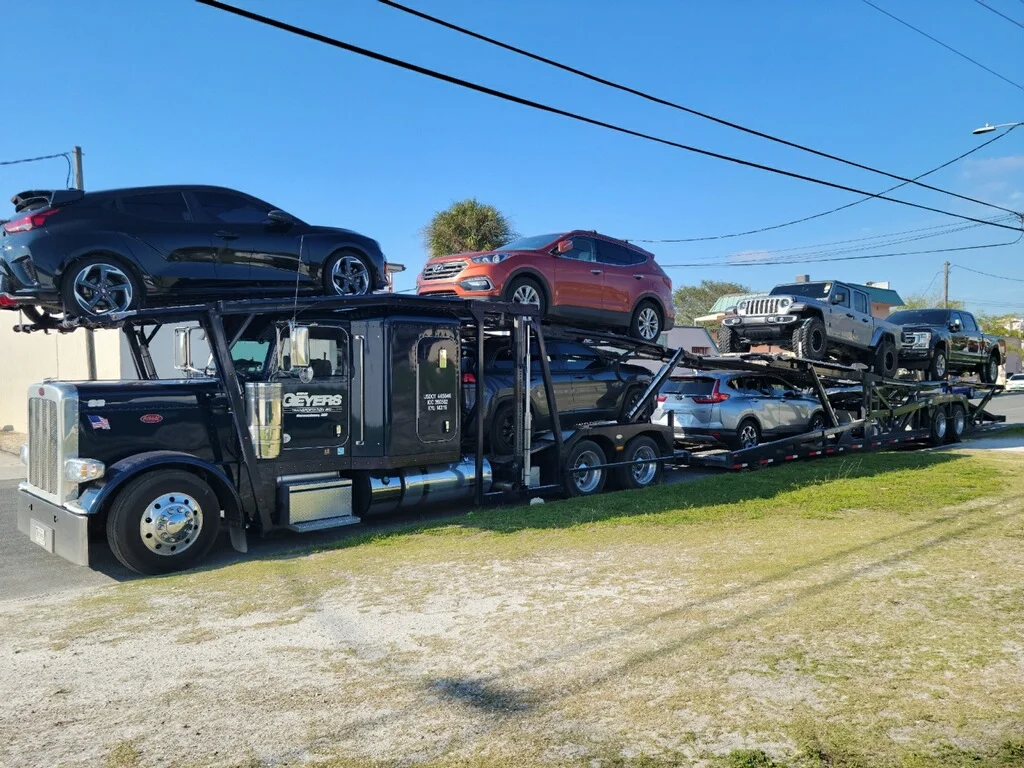
Car transport to Florida from Maryland
Car transport to Florida runs on Geyers’ regular route, with drivable vehicles normally picked up in Maryland on Friday for Monday delivery. Your vehicle travels with Geyers drivers and equipment, so there is no broker in the middle.
- Regular Friday pickup in Maryland
- Regular Monday delivery in Florida
- No third-party broker
Tell us where your vehicle is going
For car transport to Florida, share the Maryland pickup point, destination, vehicle, and preferred date. Geyers will confirm the route, current price, and pickup plan.
route quoteGeyers confirms the price before you reserve space.
What changes the cost of car transport to Florida?
There is not one flat rate for car transport to Florida. Geyers reviews the pickup and delivery points, vehicle size, and pickup plan before confirming the amount.
- Pickup and delivery pointsA regular stop and a home-service request require different routing.
- Vehicle sizeLarge, lifted, or oversized vehicles need advance confirmation and may cost more.
- Home serviceHome pickup and delivery may cost more where available.
- Pickup planGeyers confirms whether home service or one of the listed Florida stops applies.
During snowbird season: Maryland pickup normally moves to Thursday for Monday delivery in Florida. Reserve early because the route fills ahead of the season.
Fly to Florida.
Geyers brings your car.
Shipping saves you the drive and the mileage. To compare the cost, get a transport quote and add your travel expenses.
Get a transport quoteHow the weekly route works
Reserve space before the trip
Geyers confirms the price, pickup plan, and Florida delivery point. Snowbird customers should book at least 90 days ahead because the route fills early. Confirm the handoff dates before arranging your flight.
Meet the Geyers driver
You and the Geyers driver inspect the vehicle and complete the inspection sheet before loading.
Your vehicle travels south
Geyers runs the route with company drivers and open carriers. Holidays can affect the schedule.
Inspect it again in Florida
At delivery, you and a Geyers driver or employee inspect the vehicle and complete the inspection sheet.
Geyers can bring
your car home, too.
Know when you’re coming home? Ask about the return trip when you book. Geyers will confirm the pickup point and dates before you arrange your flights. Holidays can change the schedule.
Get a quote for the trip homeBooking and payment
Reserve your space in advance.
Card payments have a processing fee. Ask Geyers to confirm the amount when you book.
Geyers provides the carrier and assigns the driver
From the quote through delivery, Geyers coordinates dispatch, supplies the carrier, and assigns the driver. Your vehicle is not handed off to a third-party broker.
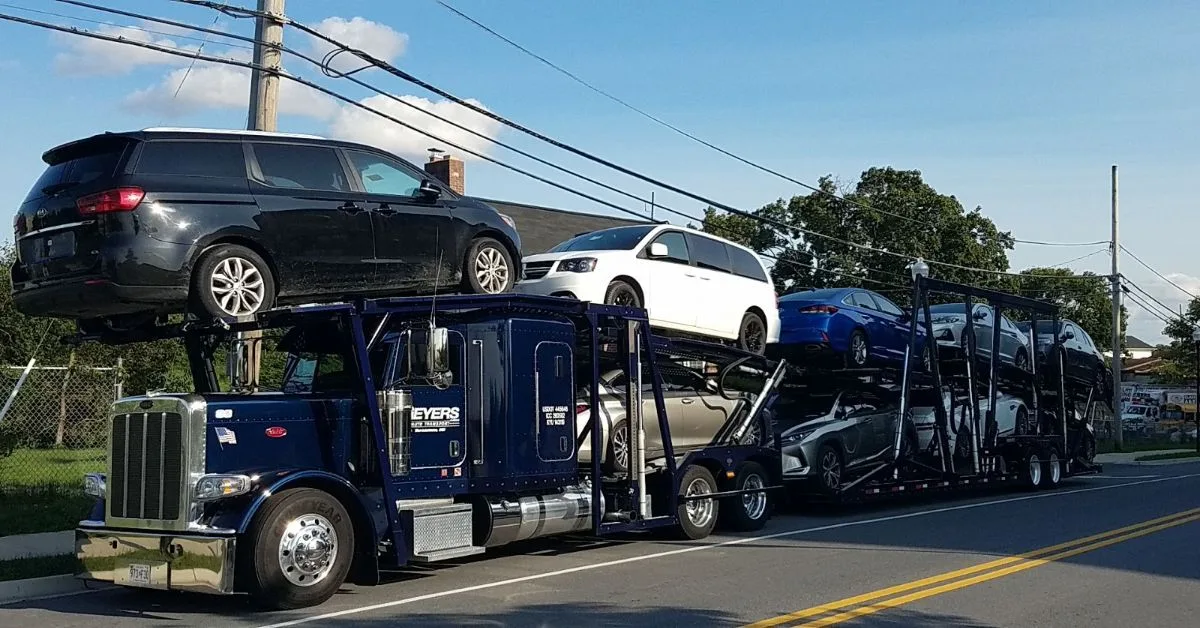

What customers say about shipping with Geyers
These customers hired Geyers for vehicle transport from Maryland, Washington, DC, or Virginia to destinations farther south.
“Every Autumn my husband and I go down to Florida to visit family and it’s always a challenge trying to find a reliable auto transport to get our car down there. This year we found Geyer’s Towing and these guys were amazing! They had a great price and they took our car south for us without a hitch.”Ann K. · Maryland to Florida customer
“What impressed me about their service was not only the affordable cost, but also the fact that they carefully transported my car without sustaining any damage. Their careful handling and attention to detail ensured that the car arrived safely at its destination along the East Coast without any problems.”Martha B. · DC to South Florida customer
“I called them up and thought their rates were quite reasonable and their service was top-notch, with no damage to my vehicle during the move. Overall, I was very happy with the experience and would definitely recommend Geyer’s Towing to anyone looking to ship their car.”Raphael A. · Virginia to Georgia customer
Maryland pickup and Florida delivery points
Geyers provides car transport to Florida from most of Maryland, parts of Northern Virginia, and locations close to I-95, using the regular Florida stops listed below.
Confirm both locations before planning the handoffPickup in Maryland and Northern Virginia
Common pickup areas include Germantown, Mount Airy, Frederick, Baltimore, Potomac, and parts of Northern Virginia. Request a quote to confirm your address.
Home pickup has real limits
Home pickup in most Maryland areas and some parts of Virginia is available for an additional charge. In Florida, plan on one of the listed stops unless Geyers confirms a different arrangement.
Regular Florida stops
Port St. Lucie, West Palm Beach, Davie, Opa Locka, ParkSmart at Fort Myers Airport, the Fort Myers transport yard, and Naples Jet Center when the customer flies there.
Need a different Florida handoff?
Call before booking. Geyers will confirm whether the location fits the route or whether a regular stop is the better plan.
What Geyers can transport
For car transport to Florida, Geyers loads drivable passenger vehicles on open carriers. Check the limits below before requesting a quote.
Drivable cars, SUVs, pickup trucks, and minivans
Vehicles must be drivable.
Lifted or oversized vehicles require advance confirmation
These vehicles may cost more.
Open carriers only
Geyers does not offer enclosed transport. If you are comparing the two methods, read the open and enclosed transport explainer.
Vehicles that are not eligible
Vehicles must be drivable. Non-running vehicles, motorcycles, boats, and three-wheeled vehicles are not eligible for this service.
For broader service information, visit the auto transport hub.
Get a transport quoteGet the vehicle ready for transport
Before car transport to Florida, a few simple steps make the condition check faster and keep the carrier safe to load. See the complete vehicle preparation guide before pickup.
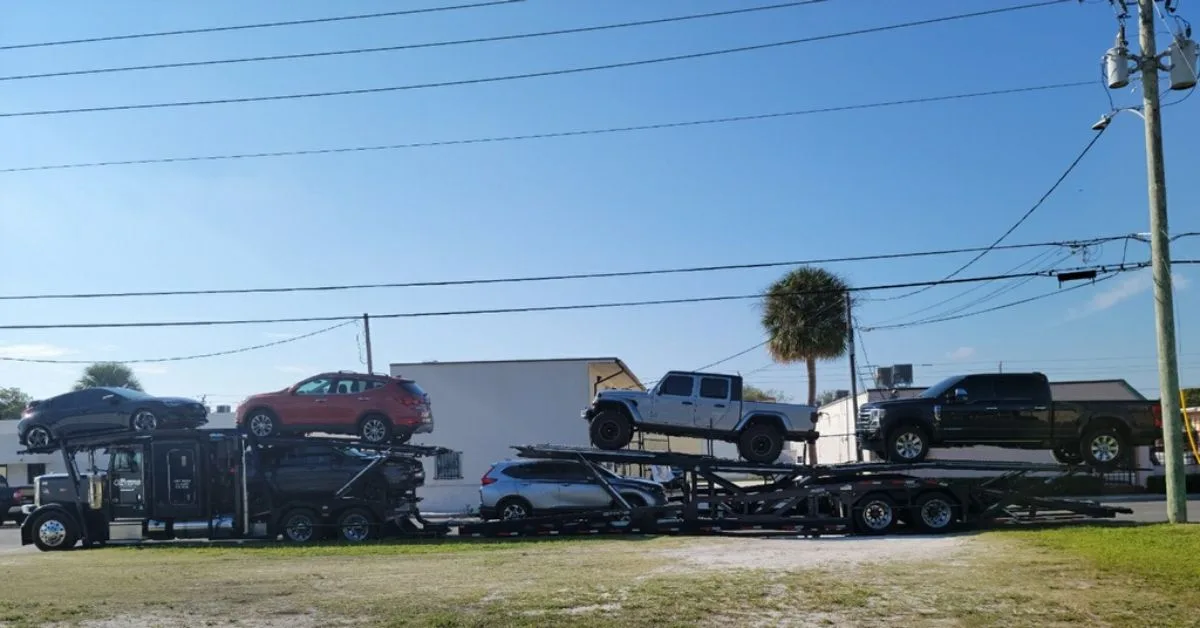
Pack lightly
You may leave up to 100 pounds of personal items in the vehicle. Keep the windows clear, leave the seats upright, and take valuables with you.
Check the fuel and keys
Leave about a quarter tank of fuel and no more than half a tank. Have a working key ready for the driver.
Document the condition
Wash the outside, take clear photos, remove or switch off toll tags, and disable the alarm before pickup.
Complete the inspection
You and a Geyers driver or employee inspect the vehicle and complete an inspection sheet at pickup and delivery.
Car transport to Florida questions
What to know about the weekly route, current pricing, pickup, vehicle requirements, and delivery.
How much does it cost to transport a car from Maryland to Florida?
Geyers confirms a current quote after reviewing the pickup and delivery points, vehicle size, timing, and whether home service is requested. Large, lifted, or oversized vehicles need advance confirmation and may cost more.
How long does transport between Maryland and Florida take?
On the regular schedule, Geyers picks up in Maryland on Friday for Monday delivery in Florida. The northbound trip leaves Florida on Monday and reaches Maryland by Friday. During the snowbird schedule, Geyers normally picks up in Maryland on Thursday for Monday Florida delivery. The return trip normally leaves Florida on Monday for Thursday delivery in Maryland. Holidays, weather, traffic, and access can change either schedule.
Where does Geyers deliver in Florida?
Regular stops include Port St. Lucie, West Palm Beach, Davie, Opa Locka, ParkSmart at Fort Myers Airport, the Fort Myers transport yard, and Naples Jet Center when the customer flies there. Ask Geyers to confirm the best handoff for your destination.
Can Geyers pick up at my home?
Home pickup in most Maryland areas and some parts of Virginia is available for an additional charge. In Florida, plan on one of the regular route stops unless Geyers confirms a different handoff before booking.
Does the vehicle need to run?
Yes. This service is for drivable vehicles; non-running vehicles are not eligible.
Does Geyers offer enclosed transport?
No. Geyers operates nine open car carriers and does not offer enclosed transport. If you are comparing the two methods, read the open and enclosed transport explainer, then request a quote only if open transport fits your vehicle.
Can I leave personal belongings in the vehicle?
Yes, up to 100 pounds. Keep the windows unobstructed and the seats upright, and remove valuables before pickup. Additional charges may apply if the vehicle is overpacked.
Is the vehicle insured during transport?
Geyers carries insurance for vehicle transport. Ask for the current policy and coverage details if you would like to review what applies before pickup.
How far ahead should I book?
Book as soon as you know your dates. Geyers recommends booking at least 90 days ahead for snowbird season because the route fills early. Prior booking is required for every trip.
Does Geyers also transport cars from Florida to Maryland?
Yes. The regular northbound route picks up in Florida on Monday for Friday delivery in Maryland. During snowbird season, Monday pickup normally arrives Thursday. See the return-trip details above.
Get a current quote for your vehicle
Talk through the route, timing, and vehicle details before you start the form.
