
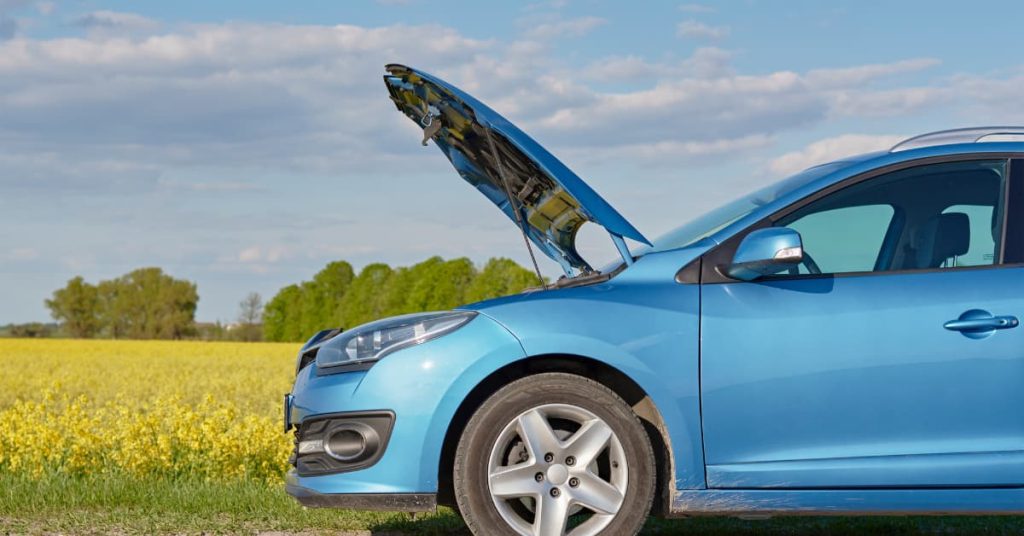
Your engine just sputtered. The temperature gauge is climbing. Or maybe you felt that sickening thump of a blown tire at 65 mph. When your car breaks down on I-270 in Maryland, three things happen fast: your heart rate spikes, traffic rushes past at terrifying speed, and you need answers immediately.
Here’s what you do right now: signal right, pull as far onto the shoulder as physics allows, turn on your hazard lights, and call Geyers Towing. Stay inside your vehicle with your seatbelt fastened unless you smell smoke or fuel. We dispatch WRECKMASTER-certified operators to I-270 breakdowns within 15 minutes, and we know every safe pull-off zone, emergency crossover, and high-risk merge point on this corridor.
I’ve coordinated hundreds of I-270 recoveries between Frederick and the Capital Beltway. The highway that connects Maryland’s tech corridor to DC carries over 200,000 vehicles daily, and when your car stops working in that river of steel, the margin for error disappears. What you do in the first 60 seconds determines whether this becomes a quick tow or a dangerous situation.
When I-270 car Breaks down: requires immediate professional response
I-270 isn’t a neighborhood street where you can leisurely troubleshoot engine problems. This highway operates at sustained speeds between 60-70 mph with truck traffic that doesn’t slow down for shoulder obstacles. The physics are unforgiving – a vehicle traveling 65 mph covers 95 feet per second, and distracted drivers don’t see disabled cars until they’re dangerously close.
The highway’s design creates specific hazard zones. Between Clarksburg and Germantown, shoulders narrow considerably near sound barriers and bridge approaches. The express lanes section from MD-121 to I-495 eliminates shoulder space entirely in some areas. Near major interchanges like Shady Grove Road and Montrose Road, merge patterns put broken-down vehicles directly in conflict with entering traffic.
Maryland State Police respond to approximately 15-20 disabled vehicle calls daily on I-270, but their priority is traffic management and safety, not mechanical recovery. They’ll help create a safe perimeter, but you still need a tow truck – and waiting 45 minutes on a highway shoulder while semi-trucks shake your car as they pass is both terrifying and dangerous.
Our average response time to I-270 breakdowns is under 15 minutes because we stage equipment strategically. We position trucks in Germantown for rapid deployment to the northern corridor, and our Frederick location covers everything from Hyattstown to the county line. We’re not scrambling from across the region – we’re already close when you call.
The Safe Pull-Off Procedure for I-270 Emergencies
If you feel your car losing power, see temperature warnings, or hear mechanical failure sounds, you have maybe 30-60 seconds to get off the travel lanes. Don’t hope the problem resolves itself – hope is not a highway survival strategy.
Signal immediately and begin moving right. Don’t brake hard unless you absolutely must – sudden speed changes confuse following traffic. Aim for the widest shoulder section you can reach. Between exits, shoulders vary dramatically. The section near Middlebrook Road (Exit 15) offers decent shoulder width. The area around Father Hurley Boulevard (Exit 9) gets tight.
Get as far right as your car’s momentum allows. Every foot of distance from the travel lane reduces collision risk. Turn your steering wheel slightly right so if you’re hit from behind, your car deflects away from traffic rather than into it. Activate hazard lights before you’ve fully stopped – other drivers need maximum warning time.
Once stopped, assess whether staying in the vehicle is safer than exiting. If you’re on a wide shoulder with good visibility, stay inside with your seatbelt fastened. If you smell fuel, see smoke, or steam is obscuring visibility, exit through the passenger side away from traffic and move behind the guardrail if one exists. Never stand in front of or directly behind your vehicle – the impact zone extends 10-15 feet in both directions.
High-Risk Zones on I-270 Where Professional Recovery Is Critical
Some sections of I-270 turn dangerous situations into genuine emergencies. The stretch between Clarksburg and Urbana (Exits 26-31) runs through rolling terrain with limited sight lines. Drivers crest hills at full highway speed with minimal reaction time if they encounter a disabled vehicle.
The express lanes section presents unique challenges. If your car fails in an express lane, you cannot simply pull to a shoulder – none exists. You must navigate across lanes to reach the rightmost shoulder, and this maneuver requires functional steering and some remaining momentum. We’ve recovered vehicles stuck in express lanes, and each one required Maryland State Police traffic breaks to execute safely.
The interchanges at Shady Grove Road, Montrose Road, and Democracy Boulevard create merge-point hazards. Traffic entering from ramps doesn’t expect to encounter stopped vehicles in acceleration lanes. If your breakdown happens near these interchanges, you’re at elevated risk from drivers focused on merging rather than obstacle avoidance.
The northern section approaching Frederick presents weather-related risks that southern sections don’t face. Winter storms hit harder as elevation increases. That same stretch gets dense fog events that reduce visibility to under 100 feet. A breakdown in these conditions requires immediate professional response – visibility is too poor for safe DIY troubleshooting.
What Our WRECKMASTER-Certified Team Does Differently on Highway Recoveries
When you call Geyers Towing for an I-270 breakdown, you’re getting operators trained specifically for high-speed highway recovery. WRECKMASTER certification isn’t a participation trophy – it’s intensive training in vehicle dynamics, safe rigging practices, and hazard zone management. Our team knows how to position trucks to create protective barriers, how to load vehicles quickly under traffic pressure, and how to read highway flow patterns to time our approach.
We arrive with proper highway-rated emergency lighting. Our trucks carry LED warning arrays visible from over half a mile in daylight conditions, giving approaching traffic maximum warning time. We set up advance warning triangles per Maryland law, and on high-risk recoveries, we coordinate with Maryland State Police for traffic breaks.
Speed matters, but safety determines our approach. A rushed recovery that puts our operator or your vehicle at risk isn’t professional service – it’s recklessness. We’ve loaded vehicles on I-270 shoulders in under eight minutes when conditions allowed, and we’ve taken 20 minutes when traffic patterns demanded extra caution. The timeline adapts to the reality we find on scene.
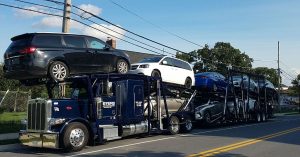
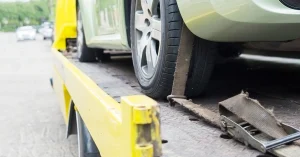
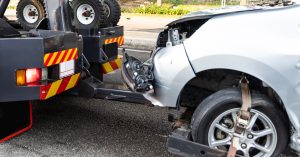
Our equipment matches highway demands. Light-duty breakdowns get our flatbed trucks that minimize ground time – your car rolls on, we secure it, and we’re moving. For vehicles that can’t roll or have drivetrain damage, we use wheel-lift configurations that create stable towing geometry at highway speeds. Heavy-duty breakdowns – box trucks, RVs, commercial vehicles – get our specialized rotator that handles complex recoveries other companies can’t execute.
After We Arrive: What Happens Next
Our operator positions the truck to shield your vehicle from traffic. This creates a safety zone where you can exit your car if you haven’t already. We’ll assess what failed – not to provide mechanical diagnosis, but to determine the safest loading method and identify any hazards like fluid leaks or damaged suspension that affect how we secure your vehicle.
You tell us where the vehicle needs to go. Your preferred repair shop in Rockville, Gaithersburg, or Frederick. Your home. Our secure storage yard if you need time to arrange repairs. We transport throughout Montgomery and Frederick Counties and into Northern Virginia when needed.
We handle the Maryland State Police interaction if they’re on scene. Highway breakdowns often generate incident reports, and we coordinate with responding officers to clear the scene efficiently. You’re not navigating bureaucracy while stressed on a highway shoulder – we manage those details.
The breakdown that felt like a crisis 15 minutes ago becomes a resolved situation. Your car is secured on our truck, you’re safe in our climate-controlled cab or in your own ride if someone picked you up, and we’re moving toward resolution rather than sitting in danger on I-270’s shoulder.
Contact Geyers Towing for Immediate I-270 Emergency Response
Save this number before you need it: 301-353-3553. When your car breaks down on I-270, you don’t have time to research towing companies or compare prices. You need immediate response from a team that knows this highway’s specific hazards and can reach you in under 15 minutes.
We’ve served Montgomery and Frederick Counties since 1993. Our WRECKMASTER-certified operators have executed thousands of highway recoveries. We know I-270’s problem areas, we stage equipment for rapid deployment, and we treat every breakdown like the emergency it actually is.
Call now if you’re broken down. Call before your next I-270 trip if you want our number programmed into your phone. Either way, when highway trouble happens, Geyers Towing responds fast.