



1. Vehicle Breakdown Situations
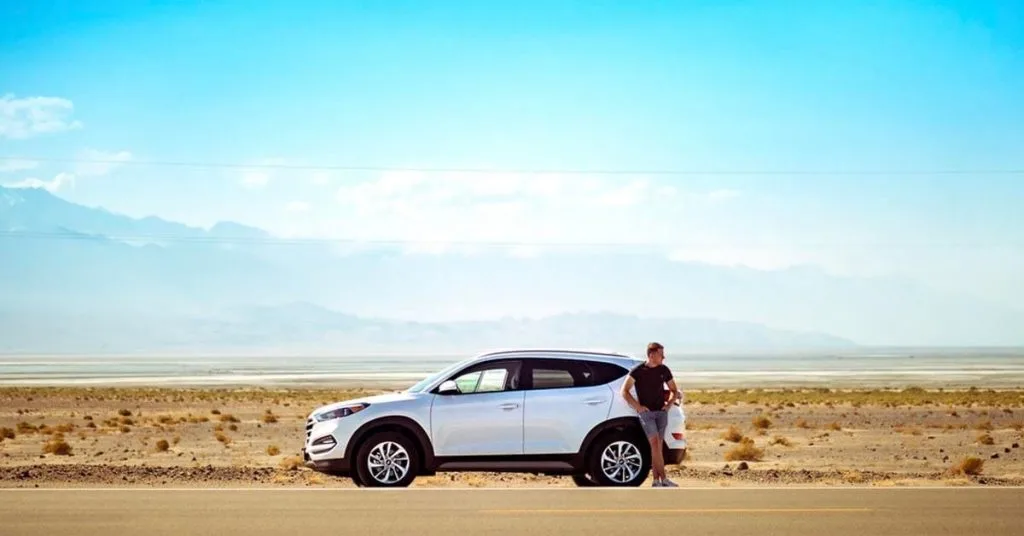
If your car suddenly stops running, wait a few minutes and try starting it again. A dead battery is often the culprit – and a jump start may solve it.
Keep jumper cables or a portable jump starter in your car. If the vehicle still won’t start after multiple attempts, don’t risk it – call a tow truck.
Not sure if it’s the battery? Our breakdown of reasons your car won’t start can help you rule out simple fixes before calling for a tow.

2. You Ran Out of Gas
Running out of fuel is more dangerous than it sounds, especially on a highway. If you’re stranded without gas and can’t safely reach a station, calling a tow truck is the safe option.
Some towing companies can deliver fuel directly – always ask when you call. For electric vehicles, see our guide on EV roadside assistance.

3. You Have a Flat Tire You Can’t Change
If you have a spare and the tools to change it, great. But that’s not always possible.
You may have stalled somewhere unsafe, the lug nuts may be too tight for hand tools, or you may have a flat tire with no spare. Learn more about handling a flat tire on the highway before attempting anything on your own.

4. You’ve Been in an Accident
After an accident, your first priority is safety – not your car. Call for emergency services if anyone is injured.
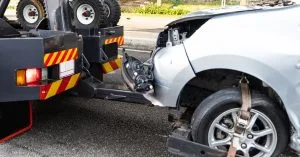
Once the scene is safe, do not attempt to drive a damaged vehicle. Even if it seems drivable, structural damage can cause sudden failure – a damaged car can leak fuel, catch fire, or have compromised steering.
Our guide on what to do after a car accident walks through the full process step by step.
10 Essential Steps When Calling a Tow Truck
Once you’ve determined your vehicle needs towing, you’re probably anxious to have it done as soon as possible. However, there are a few things you may need to do before you call a towing company, depending on the circumstances:

Step 1: Move to Safety First
Before you call anyone, get safe. If you’re on a highway or busy road, turn on your hazard lights immediately, engage the emergency brake, and exit the vehicle carefully.
Move yourself and any passengers well away from traffic – ideally behind a guardrail or up an embankment. If you’re broken down on a high-speed corridor in Maryland, read our guide on what to do when your car breaks down on I-270.

Step 2. Towing company or roadside assistance?
This matters more than most people realize. If you have roadside assistance through your auto insurance, calling them first can sometimes trigger a claims notation on your policy – even for non-accident situations.
Roadside assistance is also tied to the account holder. If you’re in a borrowed vehicle, your coverage may not apply. It’s worth understanding towing vs. roadside assistance before you’re stranded. For simple breakdowns, calling a tow truck company directly often gets you faster service at a predictable cost.

Step 3: Document the Scene if There Was an Accident
If you’ve been in a collision, take photos before anything is moved. Capture damage from multiple angles, including the other vehicle if one was involved.
Photograph the road conditions, any skid marks, and the surrounding intersection or mile marker. This documentation matters for insurance claims and any future legal proceedings. Keep in mind that tow companies can be liable for damage that occurs during the tow itself – documenting pre-existing damage protects you.


Step 4. Call your insurance company.
Before you commit to a towing company, check whether your insurer covers the cost of towing. Some policies only reimburse for specific providers.
Know this upfront – finding out after the tow that your provider isn’t covered means paying out of pocket. If you’ve been in an accident, your insurer may also dispatch a preferred towing provider directly.


Step 5: Choose the Right Tow Truck Company
If your insurer doesn’t direct you to a specific company, you’ll need to choose one quickly. Look for a tow truck company that:
- Operates 24/7 and can give you an ETA
- Has verifiable reviews on Google or Facebook
- Is licensed and insured in your state
- Can handle your vehicle type – standard, heavy-duty, or specialty
For 24-hour towing in Maryland, Geyers Towing dispatches across Montgomery County, Frederick County, and surrounding areas.

Step 6: Get a Price Estimate Before They Arrive
Always ask for an estimate before confirming service. According to 2024 industry data, the average tow costs between $75 and $125 for the first five miles, with each additional mile running $2 to $4.
Our Maryland towing cost guide breaks down what to expect by distance and situation. Get the quote confirmed verbally before the truck rolls – this protects you from inflated charges later.
Step 7. Ask about the towing method.
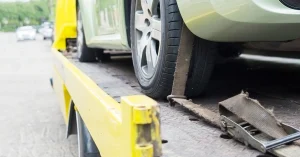
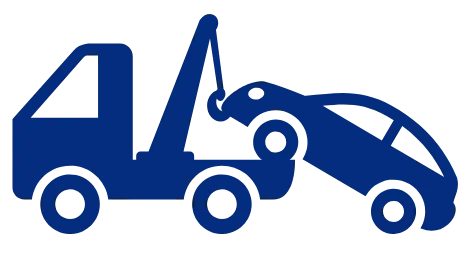
There are two primary methods: wheel-lift towing and flatbed towing. Wheel-lift rigs raise one end of the vehicle and drag it on two wheels – faster to deploy but puts stress on your drivetrain.
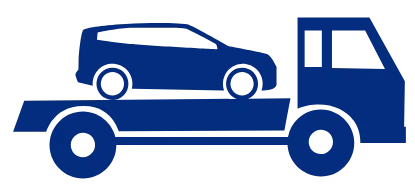
Flatbed towing loads your entire vehicle onto a platform, keeping all four wheels off the ground. It’s the only correct method for all-wheel drive vehicles, low-clearance cars, and vehicles with front-end damage. Our full breakdown of flatbed vs. wheel-lift towing explains the differences. If you have the option, always request flatbed.
🚗 Towing Method Comparison
| Method | Best For | Risk Level |
|---|---|---|
| Flatbed | AWD, luxury, damaged vehicles | Low |
| Wheel-Lift | Standard 2WD vehicles | Moderate |
| Hook & Chain | Junked or inoperable vehicles only | High |
Step 8: Decide Where to Have Your Car Towed
This decision matters and it’s easy to get wrong under pressure. Your options are typically:
- Your home – good when you’ll arrange repairs yourself
- A mechanic or dealership – best for mechanical failures needing immediate diagnosis
- A body shop – when accident damage is the primary issue
- A salvage yard – in total loss situations
If you’re in an unfamiliar area, the towing company can often recommend local mechanics. Some tow companies also offer on-site mechanical services – it’s worth asking.

Step 9. Remove documents and valuables from your vehicle.
Before the truck departs, take the following with you:
- Registration and insurance cards
- Driver’s license and any ID
- Personal items – chargers, bags, sunglasses
- Any cash or cards left in the console or glove box
Once the vehicle is at a lot, access may be limited until business hours. If your vehicle gets towed to an impound, our guide on what happens after your car gets towed covers exactly how to retrieve it.


Step 10. Get a receipt.
Ask the driver for a written receipt that includes the service performed, date, time, pick-up and drop-off locations, and the amount charged. You’ll need this to submit a reimbursement claim to your insurance company.
Take a photo of it immediately so you have a backup copy. If you tipped the driver – generally $5 to $20 is appropriate for good service – note that separately. Learn more about tipping tow truck drivers if you’re unsure what’s standard.
✅ What to Tell the Tow Truck Dispatcher
Have this information ready before the call connects:
- Your exact location – cross streets, mile marker, or GPS coordinates
- Vehicle year, make, model, and color
- The reason you need a tow (breakdown, accident, flat tire)
- Where you need the vehicle delivered
- Your name, callback number, and insurance info
Know When to Call a Towing Company
A towing company takes a stressful situation off your hands – but a little preparation goes a long way. Knowing which company to call, what your insurance covers, and what questions to ask puts you in control even when everything else doesn’t feel that way.
If you’re in Maryland and need to call a tow truck now – or want to save our number before an emergency happens – contact Geyers Towing or call (301) 540-1600. We’re available 24/7 across Montgomery County, Frederick County, and the surrounding region.